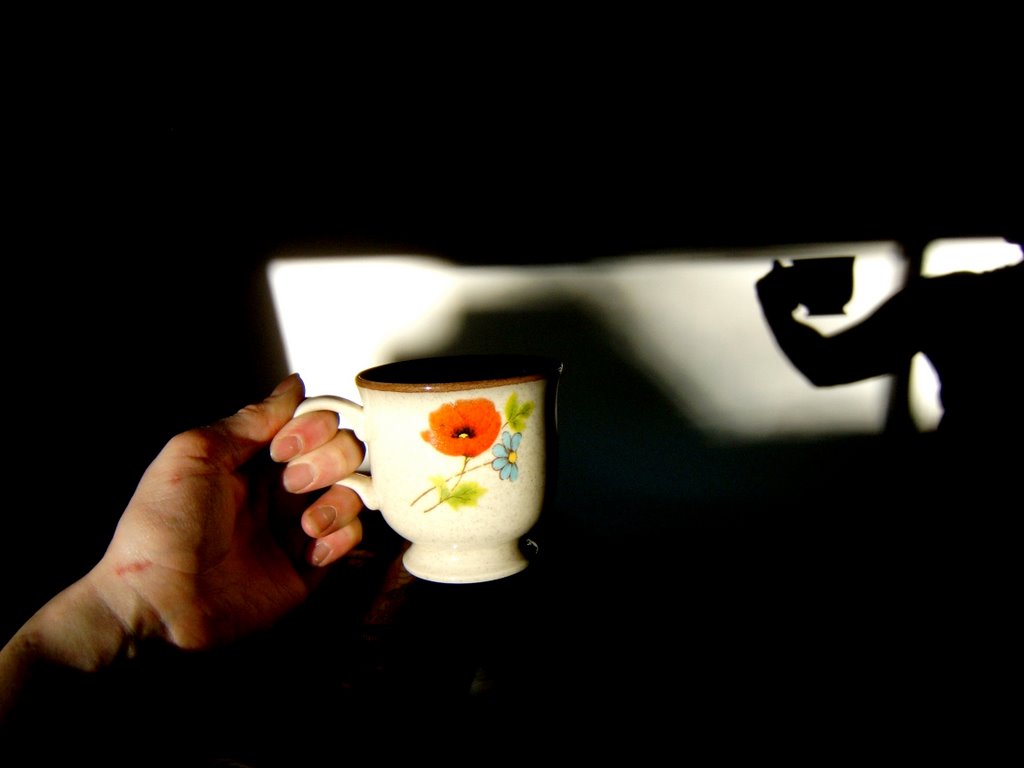
Saturday, August 19, 2006

Bili Kvitky, Part 2


{seven o'clock, wandering around the block}

Here is the second part of the story 'White Flowers' by Ukrainian author/poet /cinematographer/actor Mykola Vinhranovskyj, which I have translated. The first part is in the previous entry.

Somehow this story is exactly, precisely August to me, and also perfectly encapsulates and expresses this strange nostalgic sadness I have been feeling.

*

“Can you see me?”

“Yes, I can see you. You are so pale.”

“You cold?”

“No. You?”

“In the morning I have a flight to catch.”

“What? Really?”

“In the morning.”

“Since I’ve been with you, I’ve never been able to understand when you’re joking and when you’re being serious.”

“Where are your eyes? Aren’t you ashamed to talk like this?”

“It wasn’t enough...”

“Don’t talk about it.”

“Put your arms around me...”

*

The row of carts stretched to the river. On the last wagon, on the sacks, a girl stood in a blue-flecked dress of white linen. Behind her, the sun was setting, but it looked as if it were rising.


“Boys, take me for a ride!”

We were already in the boat, I was sitting with the oars on the yellowish water, where the sun was setting as if it were rising.


Pavlo called:

“And where is your old man?”

“Which one?”

“Yours!”

“Dad? Over near the mill.”

“Then come here, we’ll take you.”

I turned the boat to the bank, and gave her my hand. Something flashed, blinding us with a deadly-violet light that illuminated our faces. One of the wires between the poles over the river had dipped into the water.

“It split! The poor devils! It couldn’t have been insulated properly. And that’s all...” mumbled Dmytro, holding onto the girl with his grey stare.

“Don’t rock the boat, don’t rock it!”

“Come off it! Don’t be afraid, or we’ll take you back.”

“Then you better toss me. Row to the bank!” She gazed back at me. “I can’t swim.”

“I can’t swim either, so what?”

“What, you can’t?”

“I can’t. I’m afraid of water.”

“In our village, there is no stream, no pond. Actually, there was once a stream, but they started to drain the bank below the cabbages, it died away. It disappeared somewhere. Now there is neither stream nor cabbages.”

“Poor devils!”

“And where are you from?” Pavlo was pouring himself some horilka[1].

“You know Three-oaks? It’s three kilometres from there.”

“Yes, we know it. Hold on, Vasyl!”

“Pavlo, maybe you should’ve first offered something to our lady? What’s your name?”

“Nastya. But, nothing for me. You go ahead, drink.” She took a glass from Pavlo and passed it to me at the oars.

“Cheers, Nastya.”

“To your health. You want a cucumber, or an onion?”

“Cucumber.”

The girl rinsed a cucumber, and I took a bite from her hand. She salted it, and I took another bite, and another from her hands.

“We had tons of cherries this year, a whole bogful!” But her mention of the cherries was in vain: I didn’t ask for a second cucumber, and she quieted. Only she couldn’t keep her hand still – she placed it on her knee, then on the edge of the boat, and finally dipped it in the water. The sun was setting near her hand, in the amber water.


I said: “Let’s stop near the island, and sit and play some cards.”

“Row on!”

“Do you play, Nastya?”

“Cards? I do. In pairs, or alone. Perhaps, another cucumber?”

“Sure.”

She picked out the largest cucumber, and I took a bite from her golden, dripping hand. Water dripped from her elbow onto my bare foot. Nastya lifted her elbow and droplets fell onto the barrel of the rifle.

“What’s this, your gun?”

“A gun.”

“Last winter the rabbits nibbled ten hectares of apple trees.”

“And you lost the orchard?”

“It was totalled. Maybe a hundred trees survived.”

“Poor devils! Couldn’t wrap up the trees.”

“There wasn’t time. The head of the kolhos[2] was changing.” Nastya laughed. Her dark blue teeth shone delicately in the evening sun.


*

“You aren’t tired yet?”

“No. I must always have you near me. Before, I used to think that I simply couldn’t stand you in large doses. Now, when you weren’t here, I was quietly going crazy.”

“My love, you’ve always been so serious.”

“But not so much that we can’t joke about it, now.”

“True.”

“Do you remember him?”

“Who?”

“Well, the one, as they say, you ‘won me’ from?”

“No. Absolutely not. Not one thing.”

“I trust you in everything. I just don’t know if I can separate lies from truth. I’m afraid –

that I want to believe you, but on the other hand, he was a filthy liar, the one whose face you don’t remember, so now I can’t believe that everything’s good. Or really, I can, but I don’t want to, you know?”

“I understand.”

“And above all, know this. I don’t want to be confused, and I don’t want to believe you for the sake of it being easier and more peaceful. So you mustn’t lie to me, understand?”

“You know me! If I don’t tell lies, I’m not myself. That’s the first thing. The second thing is, lying is easier than speaking the truth. So I’m lying to you. Listen: I have to take a trip.

This time, it’s going to be long, and far. We won’t see each other for a year.”

“A year?”

“A year.”

“And where will you find yourself, my poor thing?”

“Working, dear one, working.”

“You’re leaving me.”

“Today we’ve got summer. So there’s autumn, winter, spring...”

“When we met, I decided to be for you a wife ‘with whom you’d have no trouble’. But you see, I’m neither a wife ‘whom he love’, nor ‘with whom he’s married’, or even a woman ‘with whom he is living.”

“You decided well.”

“I didn’t want you to have to make excuses for yourself, to throw yourself into love, more than you actually were. I wanted that you be with me as you are with yourself – more yourself, even, than you are alone.”

“When we met, I decided to win you away from the one whose face I don’t remember. I remember only you. I was intrigued: Would I win you, or not? The first evening I didn’t succeed, but the second evening I got you.”

“No, love. For me, it was the first evening. Certainly, you fall in love easily, and you can love every time like it’s the first, it’s this I understood that evening and night.”

“Yes, that’s it. What’s this you understood?”

“All the time we’ve had together, from that first evening and night right up until today, I’ve had this feeling that you’re checking on me, and that you don’t love me. You observe me. Often enough, I feel like a rabbit. So, I haven’t become a wife ‘with whom you’d have no trouble’. You see how...”

“I see. And it’s probably true.”

“Don’t run away. Be blunt with me.”

“Maybe, that’s enough about feelings?”

“It’s like you’ve slapped my face.”

“Not bad. Haven’t we got anything to eat? I’m so famished, I’m seeing stars. What have you got there?”

“Macaroni.”

“Well, there’s a meal, God help her. Still, pass it over here.”

“There’s also some of yesterday’s borshch.”

“I don’t want your borshch. You don’t know how to cook borshch. Firstly, you overcook the cabbage. You must put in the cabbage the very last so it stays hard and wiry. And the potatoes must be put in whole, not cut up. And as well as the seasonings, you need to put in some onions. Also whole. They’re sweet when cooked. Well, did I hit you hard?”

“It really doesn’t hurt.”

“ ‘Doesn’t hurt’! If you don’t learn to cook borshch, you’re lost: you don’t know me and I don’t know you. Clear?”

“Clearer than clear.”

“So, give me some macaroni and some of your old leftovers, I’ll eat it, so you won’t need to make such borshch anymore.”

“And who will cook for you on your trip?”

“You actually think that there won’t be anyone?”

“No, dear, there are women more beautiful and wiser that I am – yes, there are. Nearer, dearer, yes. More desirable, oh yes! Only there are none like me, just as there are none like you, understand? That I know, and that’s why I’m so worried by this trip. And I’m concerned about something else...”

“Tell me quickly what’s worrying you, I’m holding my breath! And pass the salt, this macaroni is like grass.”

“Wait. You can laugh later. Yes, I’m worried about something else. I can’t recall the name of the village. That summer we visited old grave mound. We made measurements and surveyed the exterior. Some old men came by, and one told me this: He was digging in his own garden near this mound, and dug up a sealed clay pot. He was overjoyed, he thought it was treasure. He opened it – it was liquid, dark and thick with a gorgeous fragrance. His old buddies came and with his wife they drank it. It was sweet and potent, they were on their knees. They drank it. It was wine. Later, they began to fear they might die. They didn’t. And so as not to test fate, they poured it out, rinsed it, and uncle then filled it with kvas[3]. And later the archaeologists came, and discovered that the pot was three hundred years old... Imagine! These people didn’t know what a rare, old wine they were drinking... So rare....”

“You’ve got a point. But, as you know, I find horilka superior.”

“Don’t evade me. Tell me so: “My darling, there is something in your arguments that won’t let me agree with you.”

“My darling, there is something in your arguments that won’t let me agree with you.”

*

The island was just your ordinary little island; it lived there in the middle of the river, between steep, sun-blanched banks amid its own miniature African jungle of waxy henbane, vigorous thistles, long-maned dogwood, pigweed and marvellous explosions of wildflowers. They shone like palmated, white stars over the pedestrian population of the island and gazed over the world expectant, and uncertain.

Few ever disturbed the island with their visits. Sometimes a gathering of ducks would approach the island, quacking below the hungry dry banks before quickly swimming downstream, into the kingdom of duckweed and willow branches.

“Here.”

With her long, solid legs the girl stepped up on the bank. Her eyes glanced around at the flowers, and quietly passed on to me. The sleepy sunshine fell down onto her shoulders, and her face looked dark against the sun.

I said:

“We’ll eat dinner with the flowers, yes?”

“Shall I go and pick some?”

“Go, but don’t be long.”

“I’ll be just a moment,” she said, not moving from her place. “I’ll be quick,” she said again, and her shadow passed my long evening shadow into the golden henbane.

“Vasyl, look, look!” the boys shouted, grabbing their rifles and crouching down. “Sit, sit down!”

Two ducks were flying our way from the mill. They were far away, and high up, but the sudden whistling of their wings gave our movements a primal instinctiveness, as if we were still neanderthals.

A grey ferociousness shone in Dmytro’s eyes, Pavlo couldn’t sit still, and so he crept off into the pigweed, and then he moved slowly upward through the weeds to the dyke where the ducks were descending. Dmytro rushed after him, drove something sharp into his foot, twitched his leg like a trussed rooster, and disappeared back into the shaggy pigweed.

My rifle looked at me imploringly from the boat, and if it had legs, it would have run after the boys crying: “Wait for me! Those ducks are for me, bang-bang, God help me!”

But here the scent of white flowers came out of the henbane. It came quiet and radiant, brushing my face so calm and light, just touching, then glancing deeply over the dark water, turning it white. The water silvered, shrugged her blue shoulders, and the sun’s rays, caressed in the white breeze, became saturated in whiteness. They floated fragrantly in the dove-coloured evening, over the white houses and above silver Synyukha.

I glanced at the rifle, but I didn’t pick it up. I walked toward the white flowers. My heart was clear and thin as the air, although somewhere in the depths of this clarity awakened a golden trumpet of anxiety. Its empty, sad sound burned in my chest. True, it was late: the trumpet blared in anguish, and the sweet alarm led me along its path, my heart leading me down shoeless and innocent.

The sun was setting as if it were rising, but layers of darkness streamed in the nostalgic air and the world looked like a zebra. Suddenly the girl appeared standing straight before me. In her hands was a bunch of white flowers.

I looked at her between the flowers, and between those white flowers she embraced me. There was a smell of lupines and water. Our heads fell out of the sinking sun.


[1] a grain alcohol, much like whisky or brandy. it burns.

[2] collective farm

[3] a sourish-sweet drink of malt and fermented black rye bread


Sunday, August 13, 2006

Bili Kvitky, Part 1


{little aster-flowers gone to seed}


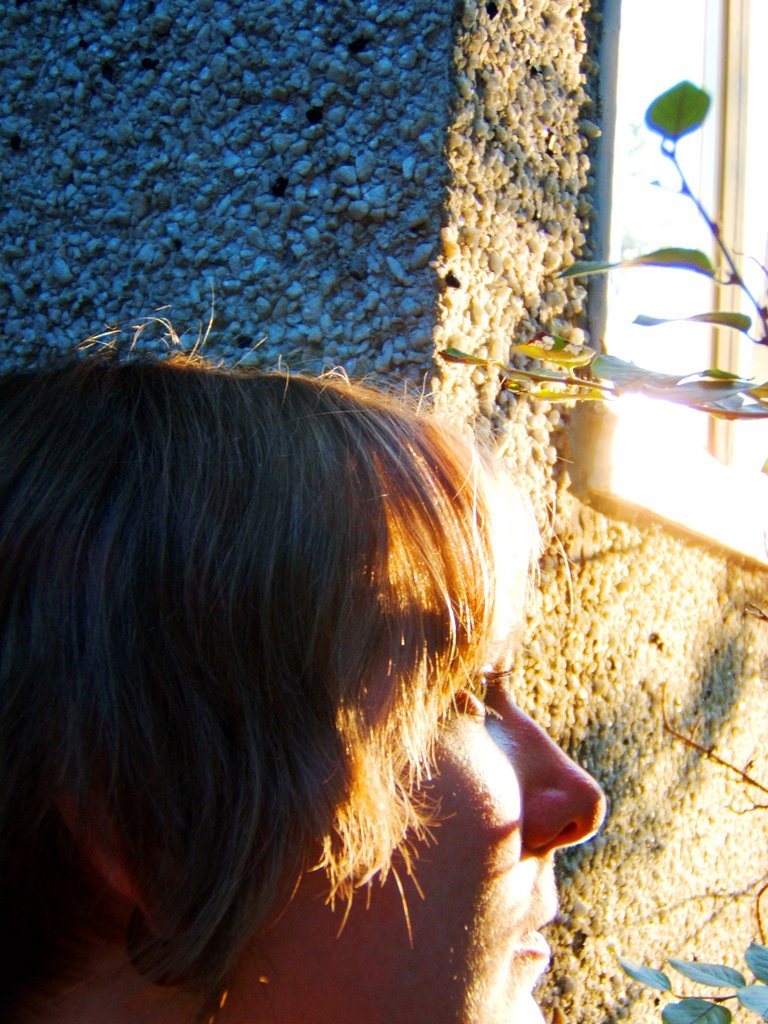
{profile by the house}

The following is the first part of my most favourite short story ever, I think. Last August it was my translation project -- the original story is called Bili Kvitky, and is by the Ukrainian writer and cinematographer, Mykola Vinhranovskyj. The setting in 'White Flowers' is so perfectly, sharply described; it is this time of year, this feeling, exactly. The shift in the light, the birds singing on colder mornings, the nostalgia for nothing and everything.

I will present it in two parts. This is the first half (or so); my translation is a little awkward in places but I am definitely pleased with certain paragraphs... though they are not quite as they are in Ukrainian. (You can be very sentimental in Ukrainian and not feel like you are drowning in sap &/or cheese.) So though some of its beauty may not come through, I think I have managed to preserve some of the achy loveliness in a few places.


White Flowers – Mykola Vinhranovskyj

It was still before sorrow. Before the golden farewell of the groves, where the blue poplars blossomed and milkweed lay on the dry banks of the river between the cliffs and the hawthorn; still before the blooming of the vines & wild dog-toothed rose...

*

“Do you want it?”

“No.”

“You do want it.”

“I’m telling you, no.”

“You don’t understand me.”

“I do understand. But, no.”

“No, you don’t understand.”

“Maybe not...”

*

It was still summer. These were quiet days over the steppes, with the calm sky rippling above the water, and perch seen lying on the yellow river bottom.

We were waiting for autumn.

We were returning from Mount Synyukha. On our knees lay shotguns, and with our boat carried by the current, we crunched green onions with our bread; milkweed was blooming, and the sky blossomed neither white nor blue – it was becoming its own colour in this pre-autumnal time when the water flows mournful and transparent, and the birds do not sleep through the night.

*

“I love you.”

*

A droplet fell from the oar.

From the grey bank a heron flew with her chick, circling low over us, and depositing something white near where Dmytro was sitting.

“Would you look at the spot she chose!” Dmytro grabbed his gun and fired. The heron looked back at her young one, waving her wing, and hid herself in the reeds and willows that separated us from the river.

“What if it was on your head?”

“So what?” said Pavlo, biting into a bluish onion. Pavlo had shot two ducks, I – one, and Dmytro, none.

The water quietly rippled against the banks, and there was a smell of gunpowder.

*

“Have you noticed, that every time we have a conversation, I always start talking to you first?”

“Don’t nag me. Honestly – why do you start nagging? Who needs it? No one. Not me, not you.”

“I love you. But you couldn’t care less.”

“No.”

“What’s that – no?”

“That’s right. I don’t care.”

“Don’t lie. You’re lying?”

“Yes, I am.”

“Because you’re a fool, such a fool, and you’re crumbling. Don’t be silly, my darling, don’t be so stupid.”

“All right, I won’t.”

“Don’t laugh! Just don’t laugh, what am I supposed to do if you laugh?”

“All right, all right...”

*


The pike escaped, and Dmytro once more grabbed his gun.

“See if she tries to get away from me again!”

“So what?”

“I’ll show her then!”

“You’ve already said that.” Pavlo was rinsing off a yellow cucumber in the water.

“I’m not a drinker, it’s you guys who choke down that moonshine who do all the bang-bang, and look – something fell on you from the sky.”

“Bang-bang! Bang-bang yourself.”

“Whatever, but I didn’t kill anything.”

“Didn’t kill!”

“So what, you didn’t kill anything.”

“Don’t kill it then.”

“Go to hell! Don’t bug me.”

“Didn’t kill, didn’t kill!”

“That’s right, I didn’t!”

“And what about us, we killed, yes?”

“Vasyl, turn towards the bank, let’s toss this ‘non-killer’!”

“Come on, boys. Really, what the hell for? Look, there’s the dike, get undressed, we’ll tow the boat.”

A second drop fell from the oar.


The rushing of the water, a row of green stones stretched across the river and beyond them, the willows below the reeds – all this was in our view. On the right bank was an antediluvian mill with three black, burnt stories, and a fourth hanging out over the water.

Here, the whole neighbourhood’s grainfields were milled, just as they were every year.

“Don’t rock the boat! Get rid of your pants.”

We undressed, & strode into the water, & the boat touched the dike nose-first.

“Lift it up, lift it!”

“I’m lifting, lift it yourself! What am I, an ox?”

“Turn up the tail-end, the tail!”

The boat went down. Up to our chests in water, we pulled it between the stones to the deeper part of the river, close to the mill.

There was a smell of flour.

From the mill stretched a long line of carts & cars with sacks of grain, and unharnessed horses grazed above the bank. Men were sitting on straw near the wagons, eating supper, playing cards, or drifting off.

*

“Hey... are you asleep already?”

“And you?”

“As you can hear, I’m not. I can’t sleep.”

“Then what are you doing?”

“Thinking.”

“So am I.”

“About what?”

“About you.”

“Me too.”

“Goodnight, then.”

“Goodnight.”


*

Wild geese in the sky! How long it’s been since I’ve seen wild geese in flight... Wild geese
circling above the mill, sensing the grain... Don’t circle, for your death lies in wait in our boat.

“Give me the gun, give it to me!”

“Let it go.”


Dmytro pushed against the water to the stern, but scraped his foot on an underwater rock and howled like a dog.


I said to him:

“Can’t you see how high they are?”

“Give it to me, I’m dying to use it.”

“Stop it, shut up.”

“Give me that gun, or I tell you, I’ll kill you.”

“Then just take it, here.”


Dmytro grabbed the gun. Up to his chest in the whirling water, he aimed it at the bellies of the flying geese.

“Well, fire! Why don’t you fire?”

“The water is swaying me, I can’t take aim.”

“Give it to me.”

“Here.”


I fired at these geese, as if they were my tears.

Fly! I don’t need you. I need only myself. For because you exist – the world, and everything else in it exists, and so do I. Fly away, for time is swaying me...


Saturday, August 05, 2006

chronotope

{old picture. aspen poplars last september up near oldman creek, whitecourt}

a poem that is still a bit unformed. work-in-progress, yes.

chronotope.

the chronotope expresses the indivisibility, the insolubility of space and time.—m. bakhtin.

back in suburbia the landscape can shift so quickly – turn your back for an afternoon,
cat-nap in the shade, work the back garden & turn around to find the horizon empty,
your grove of trees cut down in a day –

leaves all over the sidewalk strewn, dust in the air. in my twenty years
i never thought the sky would change. now i’m walking along streets there,
small shoots of grass blossoming in gaps & cracks of an asphalt mask
that tries to cover this uprooted memory –

but there’s a layer surfacing;
a small child still running there, sticks in her hand bent into a shoddy bow & willow arrows, artemis braided in her woods whipping around in the hot breeze & her skinned knees pedalling a pink bicycle, coasting down dirt-hills after her father who names the plants:

the heart-shaped shepherd’s purse, wild aster wild rose, sprig of pennycress
scottish thistle, stinging nettles, in the canola caragana canarygrass

the aspen stumps now with their sawdust smell in the soft rain, soft mud that sinks
through the strata of my cerebrum. i walk here & i can still see them stretched there, etched there like branches twisting lungs on the blue sky, above the scars of driveways, billboards, fast cars & golf carts something is remembering –

because there’s a layer surfacing
with a young girl watching the trees sway from her window, summer thunderstorms coming & going with sweet peppermint relief & she is running through the yellow stubble, through a whistling tornado of crows:

then in the winter grosbeaks, magpies, chickadees & flocks of crying waxwings
& in the springtime with robins, blue jays, hummingbirds then autumnal siskins

because we’ve dropped feathers on this land. those crows passing over, cloud shadows mark
our transience, the taste of rain & earth, the empty forest now, hallowed hollow
on the land that’s never noticed, land they thought they could forget, negate, erase
if they built enough houses, construction signs of false privilege in a place

that will never disappear – for there are still layers alive beneath my feet
where poplar roots sprout swift to grow & sigh under wind & arch their backs, buckling pavement stretching persistent to crack cobblestones & fracture cement basements & i will lie there pick pineapple-weed from the cracks that break our mother’s back

lie there with my heartbeat echoing into the dirt & i will remember my own body
like a living stratigraphy

of this place where i lived with its waxwings & thistles & magpies & poplar seeds

& deep, deeper to the buffalo bones beneath me, before me the tipi rings & pow-wow sings
now a crow complaining so loudly from the mansion spire above, feathers floating
to here where my whole body carries the memory

Wednesday, August 02, 2006

maps of experience

{swallows swooping over the athabasca river, on the windfall bridge}

I’ve been thinking about place again, as I read (my professor) Andie Palmer’s book Maps of Experience, which discusses stories recorded while travelling through Secwepemc territory. She places such a clear focus on how everything happens at both a time as well as a place, and how this unification of time & place is rooted to the land.

It also reminds me of a quote from Catherine Taine-Sheikh’s article in La rencontre du temps et de l’espace, “Poésies d’intineraire...”, which discusses toponymy and the role of places in the poetry of Mauritanian nomads:

‘La mobilité du bédouin est devenue une référence pour le nomadisme modern. Pourtant ses déplacements qui obéissant à une multitude de déterminations de tous ordres (écologique, économique, climatique, tribal, religieux), renvoient à une conceptualisation spatiale plus complexe qu’il n’y paraît de prime abord, même si elle se construit essentiellement autour de lieux bien concrets – et non pas largement rituels comme dans l’univers mondialisé de l’hypercapitalism.’

To roughly paraphrase her French, essentially she’s saying that the conceptualisation of space for Bedouin people is fundamentally different from the concept of most people in a non-nomadic, industrialized society. It differs in that the Bedouin concept is centred around actual, concrete places, whereas in our industrialized society (‘the global world of hypercapitalism’, she says), place is more ‘ritual’; it is not concrete.

It’s true. With the invention of the telephone, you didn’t have to be within earshot of a person to have conversations with them. Now, of course, between internet & cellphone (or internet on the cellphone!) you can be anywhere at all. You are not limited by land & distance.

Now, of course, this expansive communication network has allowed for the dispersal, the sharing of information & thus the furthering of knowledge & ideas in unspeakably vast ways. What it has done for learning, for creating is invaluable. It allows people to communicate who would otherwise never meet, & I realize this, and value it because of this.

However, I also feel that this type of communication, for all its connection, creates a certain dis-connection. Not only between people, for few people actual bother to see each other when they exchange information or thoughts anymore, but between people & their environments, their places, their lands.

In many societies (such as the Secwepemc that Andie Palmer describes) the transmission of story and knowledge is directly anchored to the land – land acts as a mnemonic, helping the teacher recall the important information that must be conveyed. The distinction between the oral and the written is also involved here, but for the sake of simplicity, I just want to emphasize that there are still other ways of understanding places, and understanding what they represent.

That what has happened before at a particular place, that what is happening now is all important. What a place represents needs to be remembered and respected.

This is a place too
They call it Nuklawt
That’s where we get
wild rhubarb in the springtime...
it’s the roots
boil it
and put it wherever you’re sore...

-- Angela George, p.106, Maps of Experience

If people recognized the knowledge in the landscape – whether it’s related to the knowledge of ecosystems, as in a particular plant growing in a particular place that is remembered by a related story that describes its medicinal use, or the knowledge of one’s history or spirituality (e.g. Nose Hill in Calgary being the nose of the first man/creator of the land for the Siksika cosmology) – I think that they would be apt to respect the earth more. Instead, perhaps, of thoughtlessly paving over sacred ‘noses’ and endangering plants.

“How the environment is categorized as ‘human’ or ‘built’, versus ‘natural’, may reflect how members of that culture behave with respect to the earth.”

-- Andie Palmer, p. 160, M of E

I also like to be mindful of the personal mythologies I have created in particular places. I think of the Riverlot 56 woods at the Edge-of-the-Earth, the field for headstands and alien-regeneration & all the stories and conversations there... Places in Kananaskis (like Lost Goldpan Creek, Ptarmigan Cirque, & all our myths created over years of returning... Our personal experiences with the land instill us with connections.

I find that I tend to remember important things by associating them with places – sometimes I can remember only particular details about the place, for instance, how the wind was rustling in the leaves, the angle of light through a window, or the acutely bright sunset colour of the sky, but those (mostly natural) details help me to recall exact words, sometimes. I like to be aware of places like this, for their own presence, the presence created by history, as well as what is happening, what I am living out as I am in a place. These connections present me with a certain orientation – of my history, my identity, my inspirations.

It’s important for me to share these connections to the land. Speaking with my father when we went camping and hiking this year, we discussed how it’s so nice to go to a place that we both know so well, & love so much – a place that we feel a similar connection to, a place that we understand & appreciate the same way. This has grown from our shared experiences in significant places, and the knowledge he has passed on to me on each trip, in every little spot along the way.

With all this abstract technology, the world is in your house; but with the way we seem to live on our little wireless methods of communicating, & existing, our houses seem less in contact with the world, as the earth, the land.

I know that our wired & wireless ways of communicating, bridging time & space so swiftly and adeptly, are valuable, crucial, and in many ways quite necessary. But I strongly believe it is important to remember the memory & knowledge of concrete places, & what they mean to us and to others.

Monday, July 31, 2006

pushing poems at the urban silence


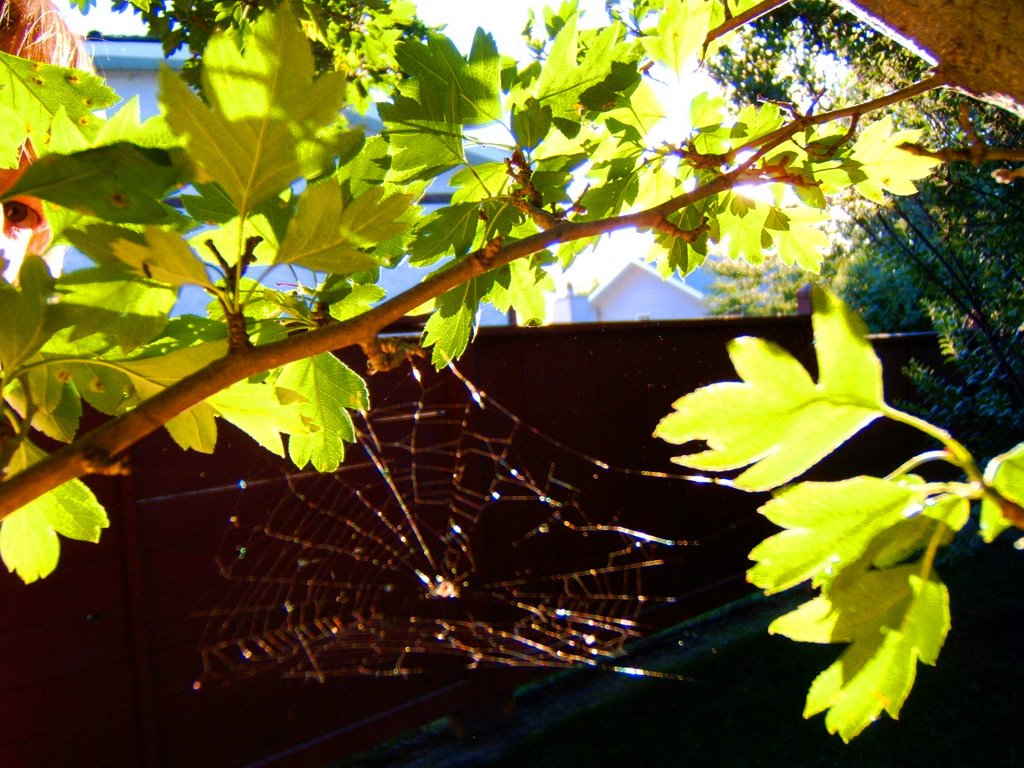
{spiderweb in the hawthorn, with sneaky self-portrait}

On Friday night, I went to the Ani diFranco concert at the Winspear (lovely, luxurious, inside-of-a-birthday-cake concert hall = atmosphere) & it was sublime. For posterity, I recorded that she played:

god's country
manhole
studying stones
not so soft (!)
decree
napoleon (!)
coming up
gravel
sunday morning
animal (!!)
half-assed (!)
reckoning
firedoor (!)
78% water
"all of this" (a new song not on the new record...)
recoil (!!!)
shameless (!)

***encore***

evolve (!)
hypnotized (!!)

I've seen her play twice before at Folkfests, & both occasions were certainly impressive... But this time seeing her I felt especially grateful, & so wholly inspired by her -- to go out and MAKE things, DO things, to create as freely & as unapologetically as she does, to always remember to do this.

Thinking of what she has accomplished and created over the past 18-ish years always impresses me. & her eloquence, even when she is confessing selfdoubt/fears/feelings of worthlessness, is inspiring & comforting. I love to see how she can spite those negative feelings by making such beautiful things.

'Cause I don't care if they eat me alive
I've got better things to do than survive

-- Ani, "Swan Dive"

This is the sort of thing I need to remember -- to just make things regardless of anything else, to create for the sake of creating. & not worry about whether what I make will be liked, disliked, accepted, or even noticed. It fuels me to spite my own anxious, paralytic feelings & just do things anyway.

& as for the importance of DOING -- on the train ride home, Bryna & I were rather overcome by the contrast of the place we had just been (a concert hall full of good music & generally friendly, feminist-sort of people) & the vehicle upon which we were travelling (a packed LRT car full of inebriated, loud, homophobic misogynists sorts, extra-annoyed because their home team had lost the football game. blaaah.) The juxtaposition was rather overwhelming, but it did make everything I was feeling about the concert infinitely more acute, more urgent. The process of mindful creation is so vital, so important, in this culture of mindless consumption. It is unspeakably important.

In attempts to distract ourselves from our fellow passengers, Bryna & I were also talking about the band Do Make Say Think, & somehow we came to the conclusion that the meaning of the band's name must be priority list of verbs -- that in creating something, it's most important to just do/make. Not that I advocate not thinking before doing, but I do know very well that it's certainly possible to think too much. Better, when you have an idea, to just do/make it, before you stifle it in overanalysis & prevent it from being created.

Ani will have a new album out on August 8th. Visit the audio section of this site for 'Reprieve' & listen to new goodness. Especially 'Hypnotize' & 'Half-assed'.


Thursday, July 27, 2006

down from the mountain


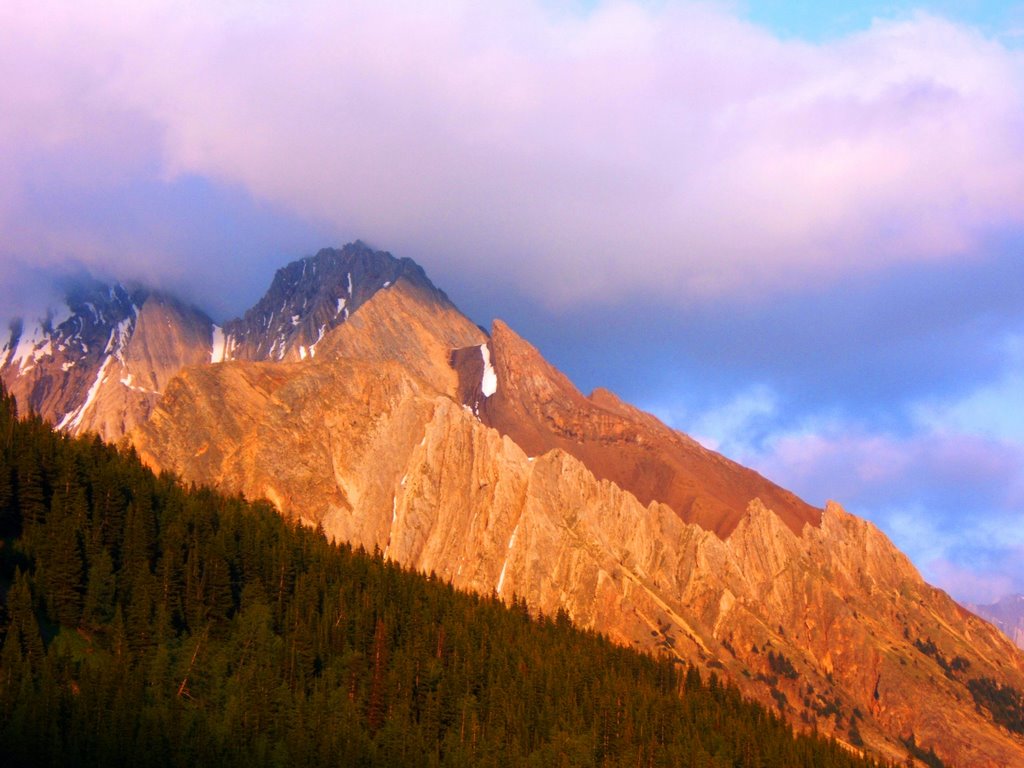
{sunset at highwood pass, mt. arethusa, opal range, kananaskis}

I think my blog is slowly starting to diversify, & metamorphose into something resembling a mlog; a music blog, that is. I still have no file-hosting space for my own mp3s but I can certainly use it as a place for linking to other delicious musique that is hosted elsewhere.

I had two little random epiphanies today while working. The first was linguistically related, in that my writing-in-french capabilities have come back to a point where I'm feeling (somewhat) fonctionellement bilingue! The other came whilst wandering in the fields of other mlogs, when I came across the news that Banco de Gaia has a new CD out. & so I wandered over to the website & found audio aplenty... realizing also that in fact there were two CDs of his that I had no idea existed.

& so listening to the tracks from the albums I'd missed, I remembered how much I enjoy Banco. It's beautiful, expansive & intelligent electronica that is heavily influenced by Middle Eastern, South Indian & Central Asian instrumentation, rhythms & vocal melodies.

I feel very spacious & powerful listening to it -- there is a certain topographical feeling to it, a texture that evokes travelling, moving through mountainous areas, there are sweeping valleys & slopes & very dark starry skies, sunsets over arid ridges. The build & the flow of all of his pieces can also be quite emotional -- there also is a socio-political consciousness to his music evident in his themes & titles -- read Toby Marks' (aka Banco de Gaia) writings on Tibet and his inspiration for 'Last Train to Lhasa', the album that was my introduction to his music.

And now, his new album focuses on the concept of 'Ferengistan' -- a 'place' caught up in war & materialism. (I also was amused to learn the etymology of the term 'Ferengi' especially considering there is a Star Trek species by that very name... & it is so very apt)

So, yes, enjoy! Do download the edit of Kara Kum (that's 'Black Desert' in Kazakh!) from 'Farewell Ferengistan' Kuos is an integral part of the 'Last Train to Lhasa' album, and I found that I quite like Down from the Mountain from 'You are Here' especially around 5:20., when it turns all swirly & delicious.

Wednesday, July 26, 2006

this is very apt.


{scrabble in the park}

I've been meaning to post the link to this article for a while now. It makes me rather happy to read about other people who feel similarily about the value of dedicated, creative & supportive friendships, and who realize that these relationships are just as important, profound, & fulfilling as any marriage or conventional 'romantic' relationship.

With a few strategic word changes, many paragraphs become strikingly applicable, indeed.

"With ink-stained fingers, the Edmontonian roommate-friends would smear cream cheese on thick slices of bread and then lounge across from each other on the bohemian-shabby pheasant couch to discuss a poem-in-progress or a radio show proposal they'd just drafted. Their brains beat as passionately as their hearts."
Saturday, July 22, 2006

sidewalk & postbox graffiti.


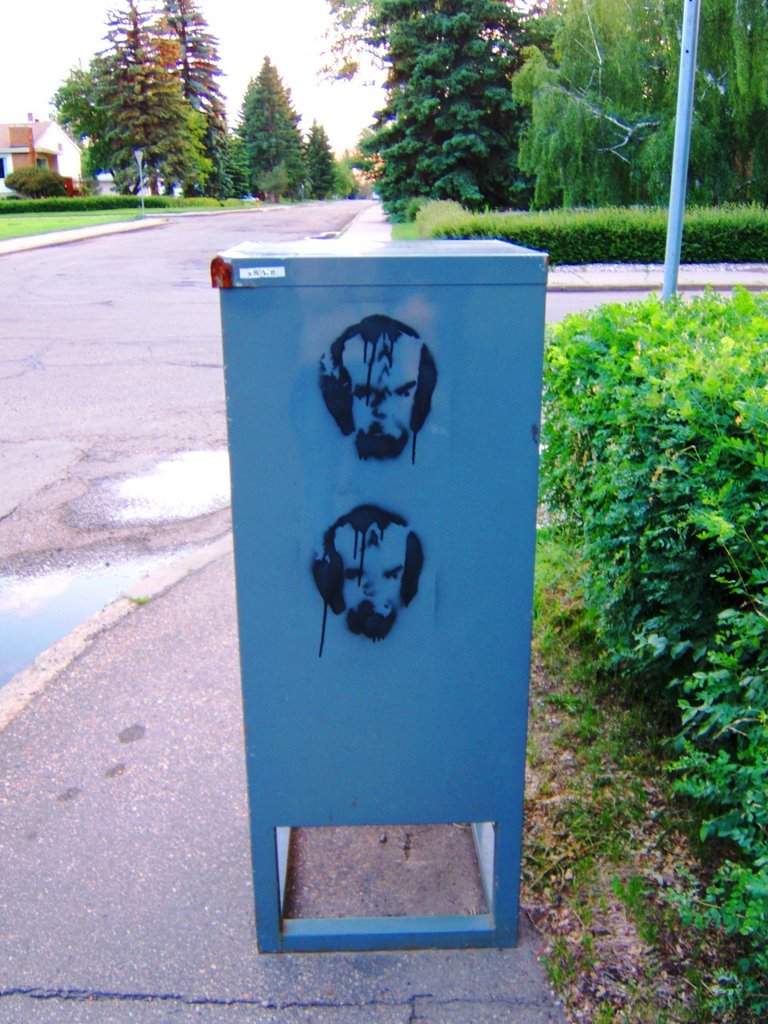
{stencil on the sidewalk, 76 ave near 105 or 104th st, near rollie miles park}

Focus is something that I have been lacking lately. It's nice that there are stencils on the sidewalk to remind me. The oppressive heat has melted my attention span for most things, especially summarizing linguistics articles in French. The sidewalk stencils (within the span of a block) also reminded me to try, love, and trust.


On our gelato obtaining expedition yesterday evening, Bryna & I had the opportunity to peruse the neighbourhood graffiti... I'm finding a lot of linguistic graffiti I'd like to investigate -- I've seen the word 'keverz' scribbled over a number of places, and also the strange bilingual phrase 'oui-knee'. (Weeny?) Edmonton also has a vibrant, eccentric post-box stencil scene, as evidenced by a double rendering of our favourite Klingon, seen above. This one is about 2 blocks south of my house.

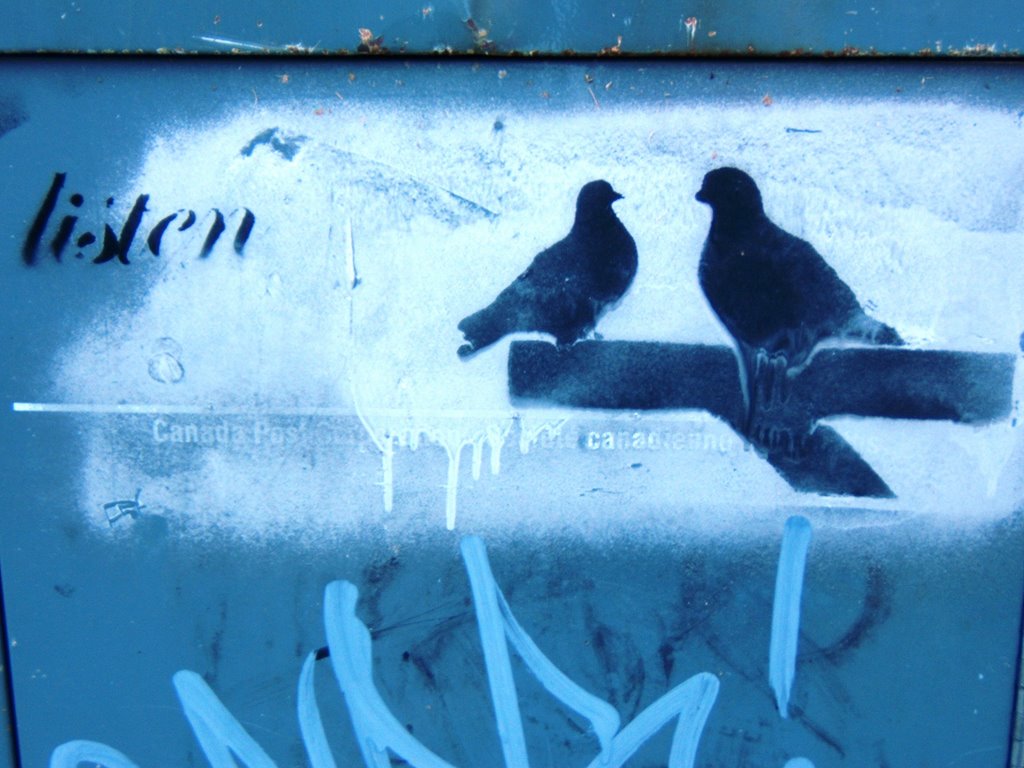
Here are some 'listen' birds, roosting on a box on 82nd avenue and about 112th street, I think. They're the only pigeons I've seen around. I also saw a sketchy-looking 'listen' bird sprayed on bus-stop bench on Whyte Avenue that was advertising French bilingual school programs. It said 'ecoutez' instead. & that made me happy.

Yes. I should focus.

Tuesday, July 18, 2006

smells like rain today

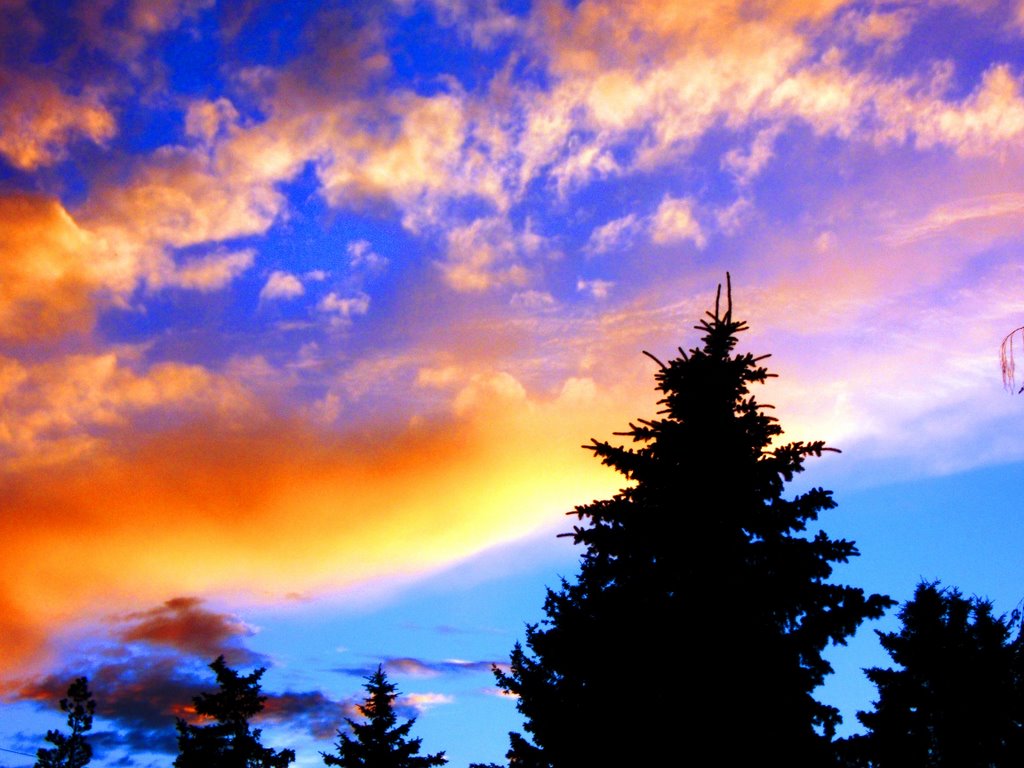
{sunset after the rain, belgravia}


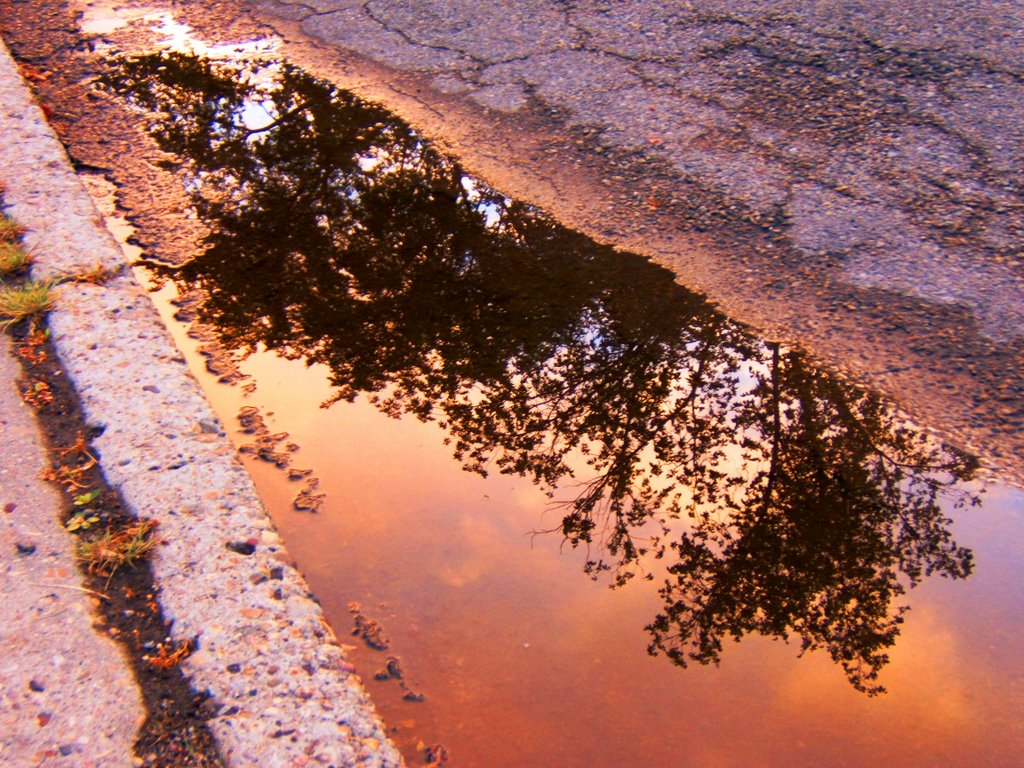
{tree reflections in a puddle}


"Stand in the shade of me
Things are now made of me
The weathervane will say
Smells like rain today."

I am in love with Tom Waits' song 'Green Grass' as covered by the splendid Brazilian singer Cibelle. If I were very technologically adept, I would somehow link to it, like those nifty mlogs (mlog = music blog). But alas. Do attempt to download it. Or really, anything that she sings.

Saturday, July 15, 2006

creation is soundful. (r. murray schafer)

{this is a calico cat that lives a few houses down, who likes visiting us & sleeping on our porch. his meow is very plaintive & sweet & yowly.}

I have been thinking a lot lately about sound, & how we remember sounds, how we store aural memories. Not so much the process of how we remember the things we hear, the songs or facts or stories, but how we recall the quality of sound, its texture, resonance. How we conjure up the particular tone of someone’s voice, the sound of wind moving through lodgepole pine trees, the scratchy squawk of magpies in the morning – how we remember the details of the soundscapes we inhabit.

I was having a nap this afternoon & was awakened quite definitively by a bagpipe medley, coming from the church across the street. Bagpipes have the timbre of geese (in a good way, not a dying-goose-in-pain way), make me think of the sound of water moving over rocks & grasses, makes me think of the sound that sunlight would make when it shines on green pine trees, or makes long november-ish shadows over wheat & dead grasses. So I lay in my bed & listened to the streams of music, hoping it was a wedding, not a funeral. & indeed it was a wedding, because when the bagpipes ceased, there was a small roar of cheering, the sound of an old car’s motor sputtering & vrooming, & then the sound of a garland of tin cans banging & clattering over the warm asphalt.

& I thought about how the visual is more valued in our culture – Bryna wrote a super-excellent paper on gendered sound, the visual vs. the oral/aural, which discusses (among many things) the celebration of the visual, the visual primacy so omnipresent in western industrialized societies. This is no better exhibited in the way we take so many pictures – that photographs are the way in which we preserve memories of any important event. (That there is so much advertising based around this – photo albums as ‘memory books’, ‘preserving your memories’, etc).

The wedding participants & guests will undoubtedly have taken many photographs. They will remember the wedding attire, the light coming through the stained glass in the church, the old turquoise car with the shiny cans glinting in the sun. But how well will they remember the clank of the cans, the tremulous slide of the notes in the bagpipe melodies?

I suppose now many people do make audiovisual recordings of events, where together both elements are important. However, I would still argue for a favouring of the visual, because it is much rarer to have a solely audio recording of such things.

Audio recordings (that are non-musical) sometimes don’t go over so well with the general public sometimes. (Poor audio-(w)hereabouts!) But I still believe that they are essential & incredibly important, and evocative in ways that the visual masks. When I listen to Bryna’s recording of her family’s Easter dinner, when I listen to the recording we made skiing in the woods – you pay attention to so much more without the visual. It’s easy to be distracted by what we see. Different elements emerge, become salient – things like voice quality, little movements & fidgets around a table, & the precise layers of sound, train whistles, frosty breathing, the crunchy squeak of snow beneath ski & its changing tone moving over the dips of the trail.

Bryna is about to start on a writing project with an audio component, where she will incorporate found sounds with sound clips & text that she will read. I am so excited to have our neighbourhood, places we know documented. I think this is very, very important – to create these records, to document & highlight the sounds around... like R. Murray Schafer did with his soundscapes and soundmarks

Because I worry about losing sounds, forgetting them. I don’t think it’s that our visual memory is inherently stronger than our aural memory, but I think we do tend to develop it more in this visually-prime society, & we have such a plethora of visual aids to help us, like our photos & such. This is unlike a society such as that of the Kaluli (see Stephen Feld’s very good book, Sound and Sentiment) – where sound is the focal point of everything.

To think of forgetting the sound of my grandma’s voice makes me inexpressibly sad. Her voice is such an integral part of who she is – it carried her kindness, her humour, her weariness, her wisdom. I am so glad that I have those four little songs I have recorded us singing, so I can always remember. I probably won’t forget the songs themselves, I can’t even really imagine forgetting her voice – but it’s nice to know that I can even put them in my new-fangled technology like my mp3 player & carry them around in my pocket & have her voice singing to me kazalo divchatko, or sumno meni sumno, anytime I like.

Saturday, July 08, 2006

neighbourhood botany lesson


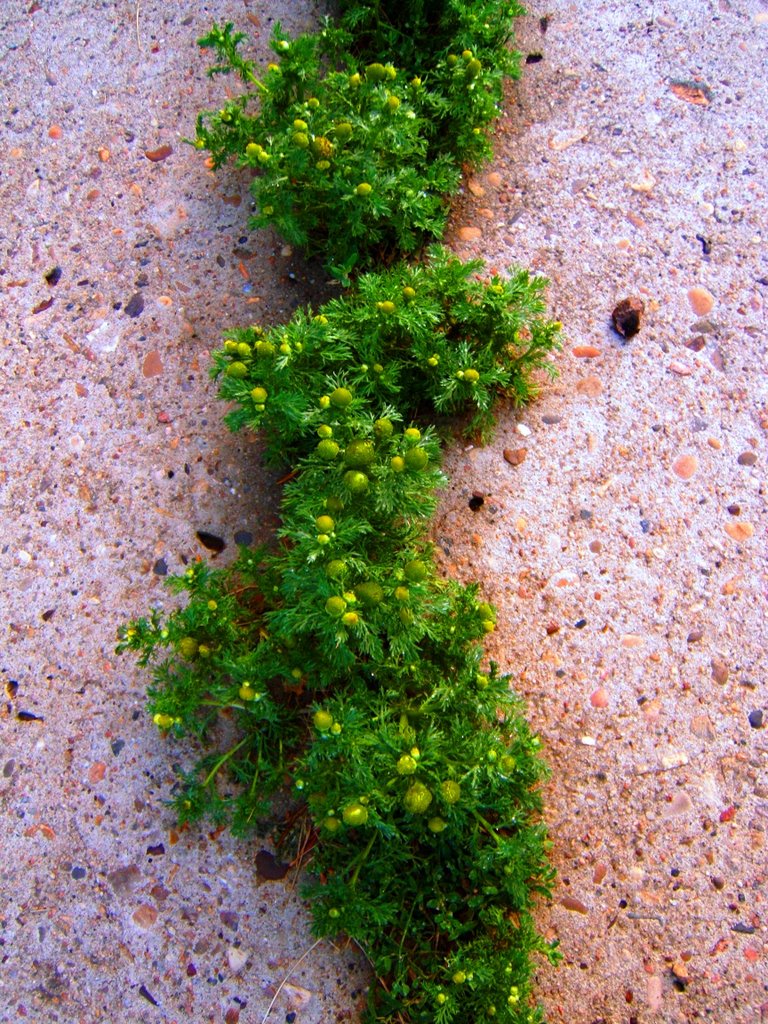
{pineapple weed -- matricaria discoidea}


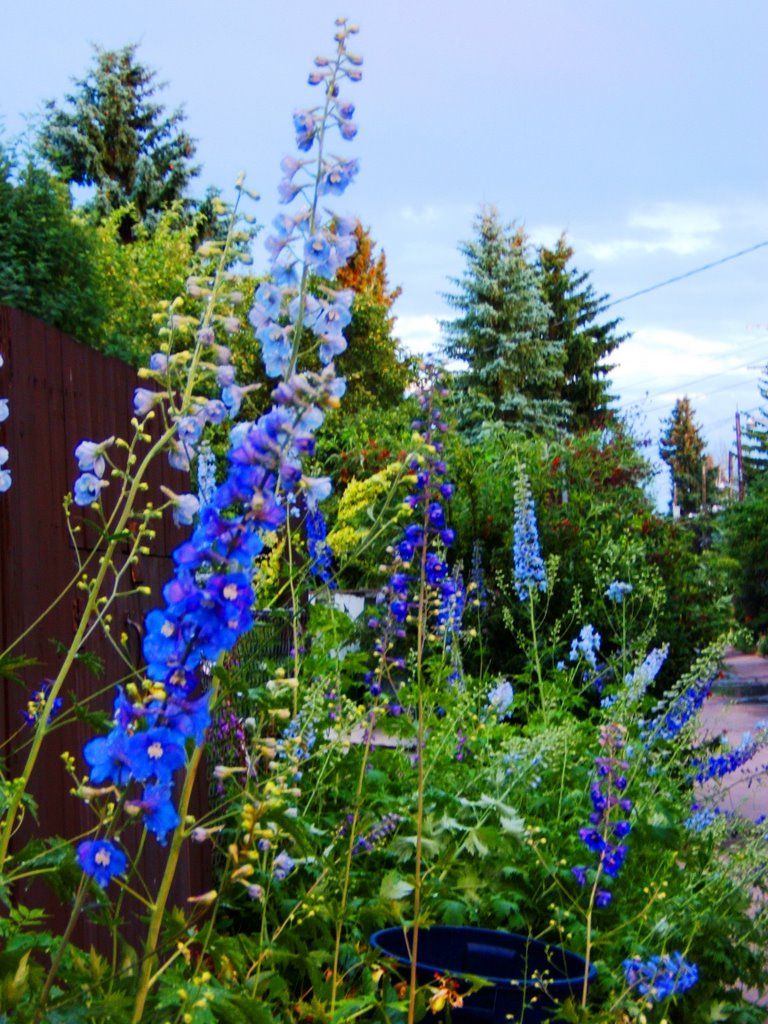
{larkspur -- delphinium}

After it rained last night, I went traipsing about the neighbourhood with my camera... I noticed how that while suburbia has one uniform smell after the rain -- that of slightly sweet grassy peppermint -- Edmonton, or at least the Belgravia neighbourhood, smells like a complex blend of that same mint, with notes of ripe compost, pot, campfire smoke, & bus exhaust. When I arrived home, Bryna said I sounded like a dog recounting all the scents... "& then I smelled this! & a bit of this! & then some of this, & then & then..." So yes. My olfactory memory is expanding...

I also took pictures of plants -- the top one seen here is pineapple weed, & is a relation to yarrow & ragweed. I remember it from my childhood -- it grew along my grandma's garden path, just like it does on my street, cracking through the pavement like a furry green backbone... We used to pick the small buds & mash them between our fingers to release the sweet, tropical scent. I had previously thought it was an introduced weed, but it's indigenous to North America & has been used for thousands of years for many purposes: a insect repellent when mixed with fir & sweetgrass, mixed in salads, or brewed a chamomile-like tea to aid menstrual cramps, heartburn & indigestion, & fevers. Again, another nutritious weed rendered inedible by urban pollutants...

The second picture is of larkspur, or delphinium. It grows everywhere here, lining the gravelly alleys & the sides of houses, all elegant & sentinel-like. Traditionally in the Carpathians it was sacred to the feast of Ivana Kupala (John the Baptist), & was used to repel lightning & vampires. However, its gorgeousness is deceptive. In Ukrainian it is called sokyrky, or 'little hatchets' -- it is also related to the adjective sokyrkuvatyj, which means bitter, malignant, & caustic, which is very apt considering that all parts of the plant contain the extremely poisonous, paralytic alkaloid delphinidin. Thus, as lovely as it is, its terrible purple vertebrae make me uneasy. Even the sap of the plant burns, so I give it a wide berth on my way to fetch my bike in the mornings...

(Up next: Russian Sage, Asters, & other good things)


Wednesday, July 05, 2006

poetry is not a luxury (audre lorde)

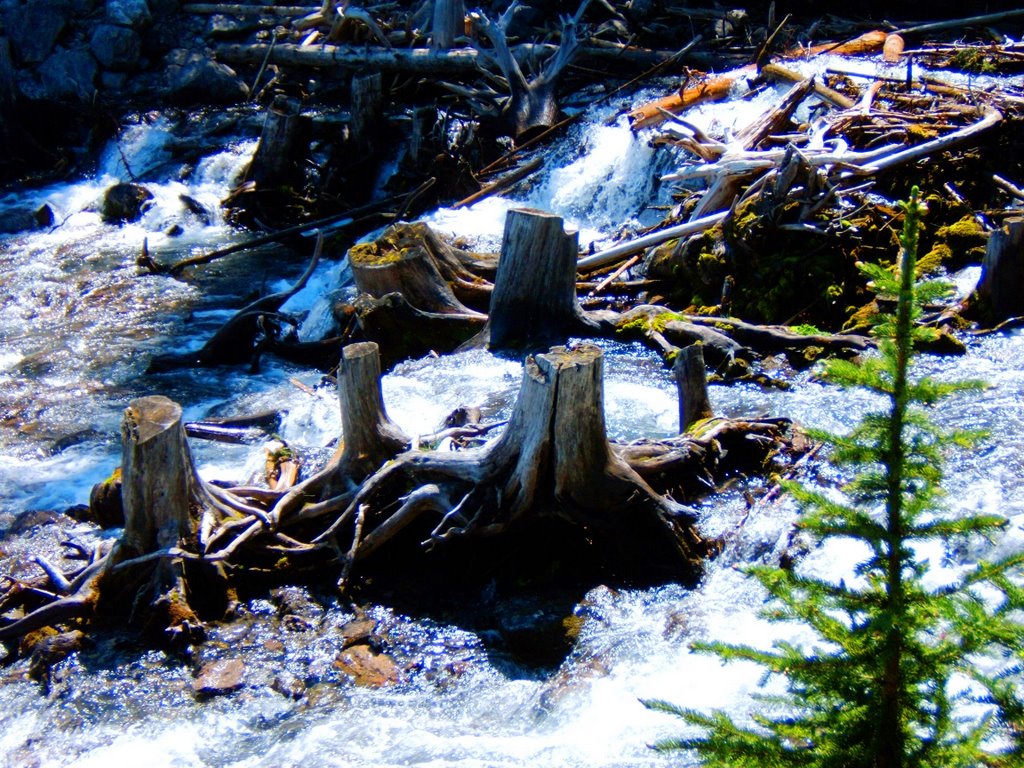
{tree stumps below sarrail falls, kananaskis}
I recently stumbled across this webpage (http://www.goodreports.net/) and read a few essays by the author, Alex Good, that critique the current scene of published poetry in Canada. He primarily writes book reviews (see Carmine Starnino’s ‘The New Canon’), but I found a few rants as well under the essays and reviews section. (See: “The Morning After”, an essay from 2001 dealing with April as National Poetry Month, etc)

Now, currently I am debating whether or not to send him a little note, because the more I think about what he has to say about poetry, the more I wonder if he has actually read any recent poetry...

So I read these essays – he said some things I agree with (e.g. some poetry is pretentious), as well as some things I vehemently disagree with (which I will discuss in a moment). However, overall I just dismissed them as just another person who doesn’t like (hasn’t read??) much contemporary poetry, and I suppose I agreed with him in some ways when he talked about how pretentious some poetry can be, etc. It’s true. It can be.

But not all poetry now is like that, not by any means at all. Not at all.

Tonight I watched a film ‘Listening for Something’ that is all conversations between Adrienne Rich and Dionne Brand, and is beautiful and thoughtful and illuminating in every possible way – it’s so fascinating to listen to them discuss politics and class issues in a thoughtful, respectful, yet provocative way, and then hear them read their poetry, in a way that is like collaborative storytelling... and immediately I thought back to these things that Good has written. And I just couldn’t understand the place from which he writes, I couldn’t understand how he could be missing so much.

In his piece called ‘The Morning After’, he writes:

“The dullness of today's poetry has become so pervasive, such a given, that we have to force ourselves to remember that poetry is not at all dull by nature. Donne is not dull. Blake is not dull. Browning, Whitman, Dickinson, and Pound are not dull. Reading new poetry, however, nearly always bores me to tears, and for many of the reasons we have just been canvassing: its sameness, the lack of imagination and energy in the language and verse, and the unalterable truth of human nature that it is never very interesting listening to people talk about themselves.”

Or, in his review of the ‘The New Canon’, he implies that most of the poetry being written is detached & irrelevant:

“But it has always been the long poem, the epic, that most directly addressed, allegorically or otherwise, our deepest political, religious, intellectual, cultural, and social concerns... The non-narrative, non-thematic, non-intellectual (indeed anti-intellectual) poetry of epiphany and observation, no matter how exquisitely crafted and brilliantly realized, is no replacement.”

And so, I can’t help but feel incredulous. He deifies Donne, Pound, all those past poets – but has he ever read Dionne Brand? Adrienne Rich? They are writing now, still writing, and I’d hardly call them dull or irrelevant – they both are the first to come to mind when I think of poetry that is deeply socially, politically, spiritually, & intellectually aware.

And he is so quick to denigrate the non-epic poetry – doesn’t he understand that all realizations, all powerful statements come from ‘epiphany and observation’. (Even the themes that find their way into epic poems begin here!) That’s the only way we ever come to understand anything at all. To be able to express your own moments of clarity, comprehension, emotion, idea is the most potent thing I can think of – I am so unspeakably, inexpressibly thankful for writing for inspiration. I truly am. Being able to express my feelings and experiences and thoughts in a way that even a few people find relatable and meaningful saves me.

He needs to read Rich’s “What is Found There: Notebooks on Poetry and Politics” – perhaps after reading some of these essays he will finally see that there is a connection between poetry and everything. That a person who says ‘I don’t understand poetry’ is losing so much, that a person who reads two poems in junior high school and decides poetry is ‘dull’ because it doesn’t flash like a television & does involve thinking, and feeling, is selling themselves short.
In her piece entitled, ‘To invent what we desire’, she quotes Audre Lorde: “Poetry is not a luxury.” And that in itself, is so much of what her writing embodies. Poetry is necessary, and accessible, & can be created & understood by everyone. It is, as she writes, “activity and survival.”

So I am very close to writing a friendly little letter to this Alex character, suggesting that he go to his nearest library, rent this film, tell him to listen to these women discuss what inspires them, drives them -- issues of race and gender and sexuality, the politics of the countries in which they reside, dying, living, disease, desire, everything. And then he can listen to their poetry (full of striking imagery & delicious phonology), like Dionne Brand’s ‘No Language is Neutral’, Adrienne Rich’s ‘An Atlas of a Difficult World’ and be moved by poetry that is relevant, political, full of passion, anything but dull.

Monday, July 03, 2006

nova knyzhka! my chapbook is done.


I recently finished my second chapbook-zine; it is called 'waxwing cloud' & contains eleven poems written over last fall & winter & spring, as well as photographs i have taken mixed with collage-bits.

If you would like one, please let me know; I have 11 left. You can leave me a note here or via email, & I will send along a copy. They are all hand-bound with wool, & contain pretty papers (brown lokta from nepal & oatmeal-y coloured earth's general store paper).

'Tis all.

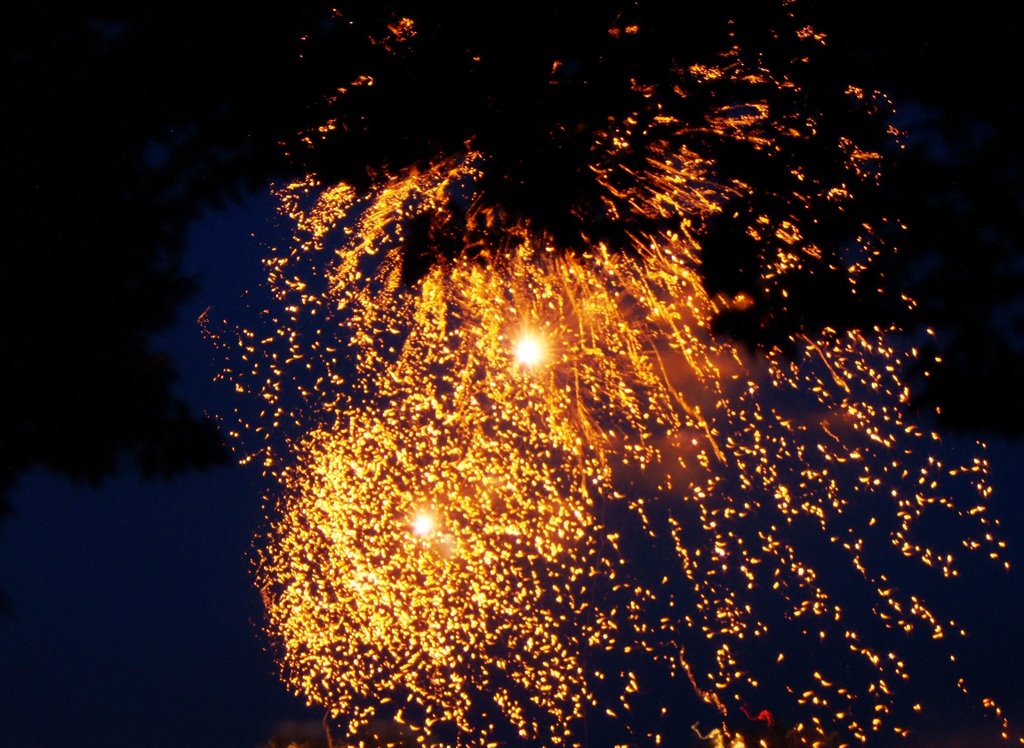
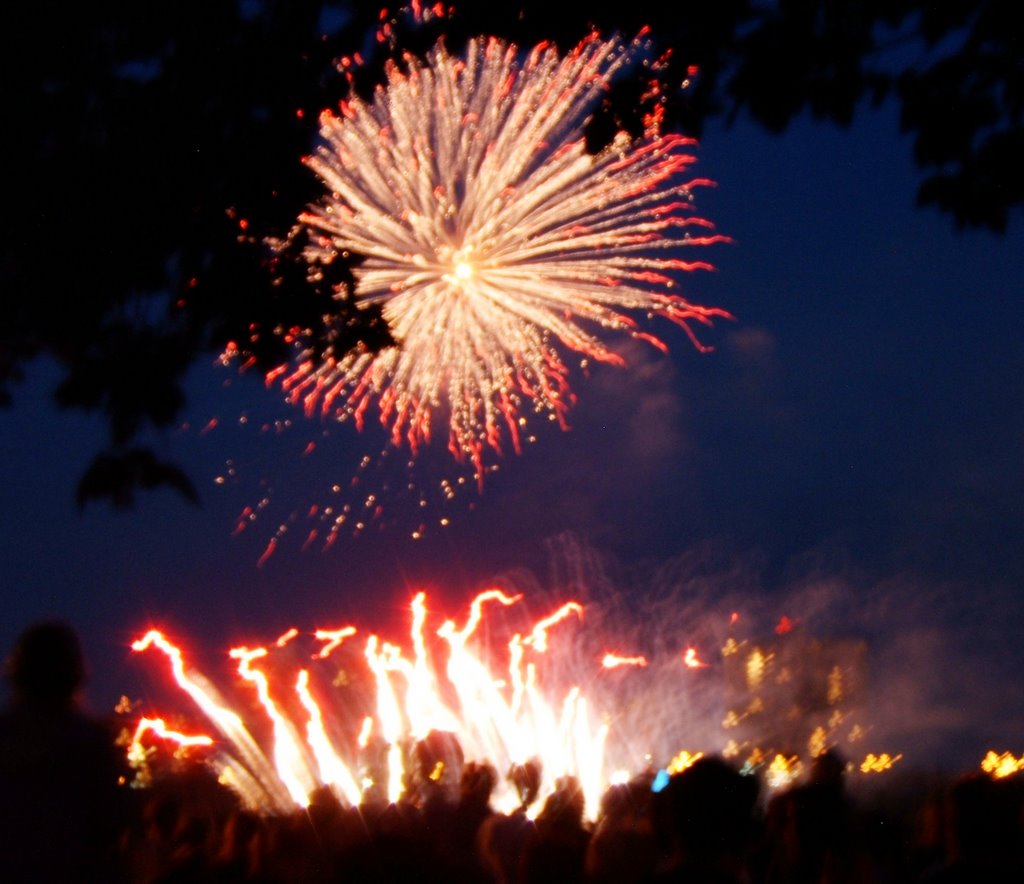
canada day fireworks (that resemble oceanic creatures)

{golden jellyfish}

{purple sea urchin}


{red tentacles reaching for a chrysanthemum}

{sunshowers & white fern fronds}

Friday, June 30, 2006

river valley trees

{river valley trees on the running trail to hawrelak}

on the promontory the old tree
unravels with sticky sap trails
of trailing memory, floating like
aspen fuzz, days that creak with uncertainty

rolling past summer thunderstorms
lightning-struck branches reaching
beyond his hospital windows &
tired concrete

rain aches his bones hollowed
ivory pelicans black-tipped wings receding
over the silt-swollen river,
the crumbling rust of their banks

he watches her running in the tunnels
of the woods below,
foxtails silver ghosts brushing ankles,
remembering what the body is meant for

as she plunges down the riverside
gravelly footsteps shedding their
small avalanche trails rushing behind her,
ochred stain blood of rock on her shoes

(do you remember the taste of dust & salt
trickling down your face, slow green flow
& the air thick with pollen & light?)


on the promontory the old tree
waits & he sees her legs’ blue blur,
approach of thunder rustling up,
echoing in decaying cambium

(do you remember how once too
your running legs could become
limbs of trees, the green leaves of her breath
rising falling, the lungs of earth)
but only the pain now, in the very marrow,
the lightning on the blue of his eyes –

Wednesday, June 28, 2006

kananaskis mountains

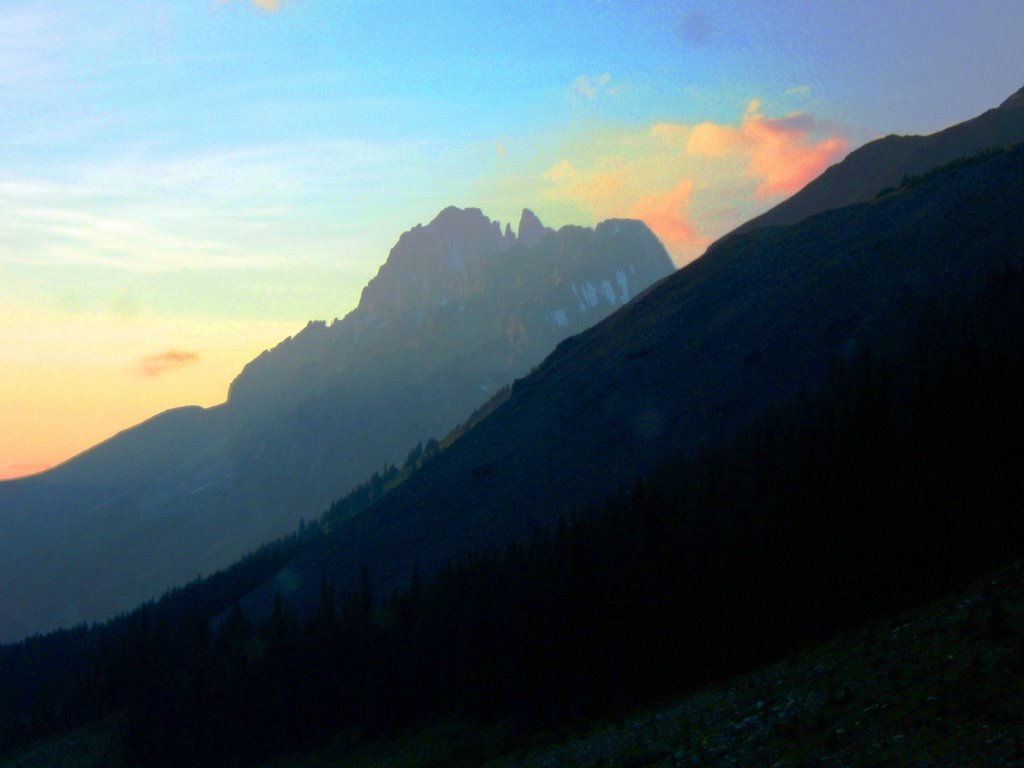
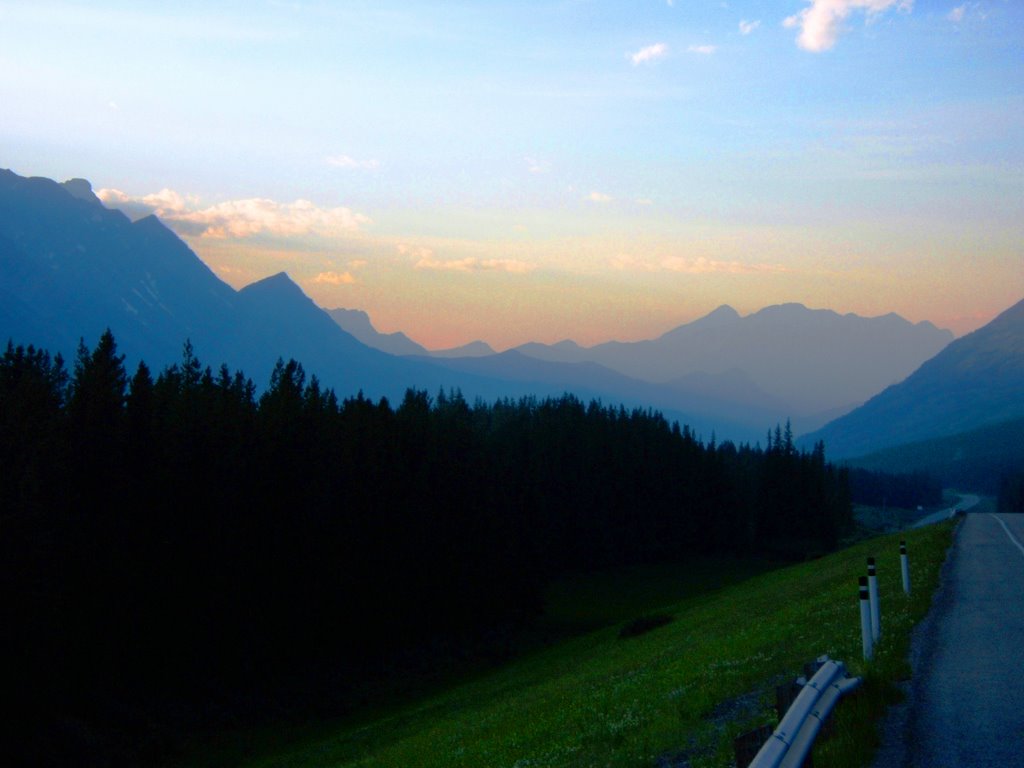
mt. elpoca, looking down from highwood pass at dusk

looking down the kananaskis valley at dusk

"Я візьму тебе на Верховину

Де ми знайдем чудовий край,

Поглянемо на полонину

На чарівний, безмежний рай."

-- Чекання

very small morsels of kananaskis

lady's-slipper orchid, campsite

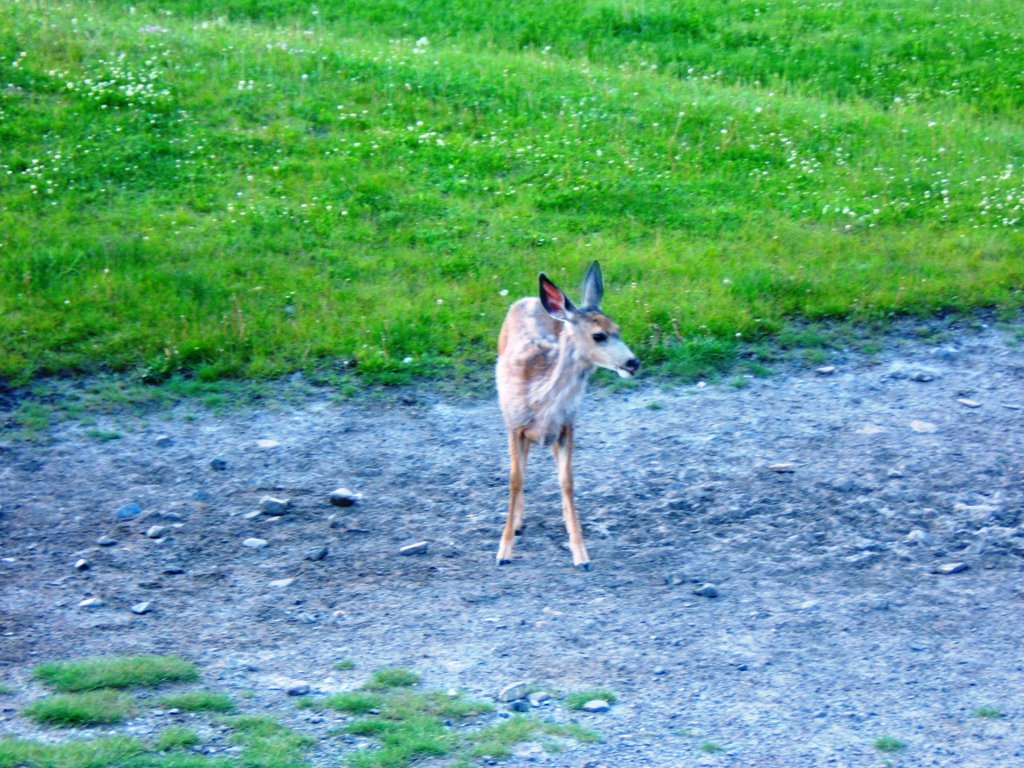
fawn at the salt-lick

Wednesday, June 21, 2006

i am very lucky.

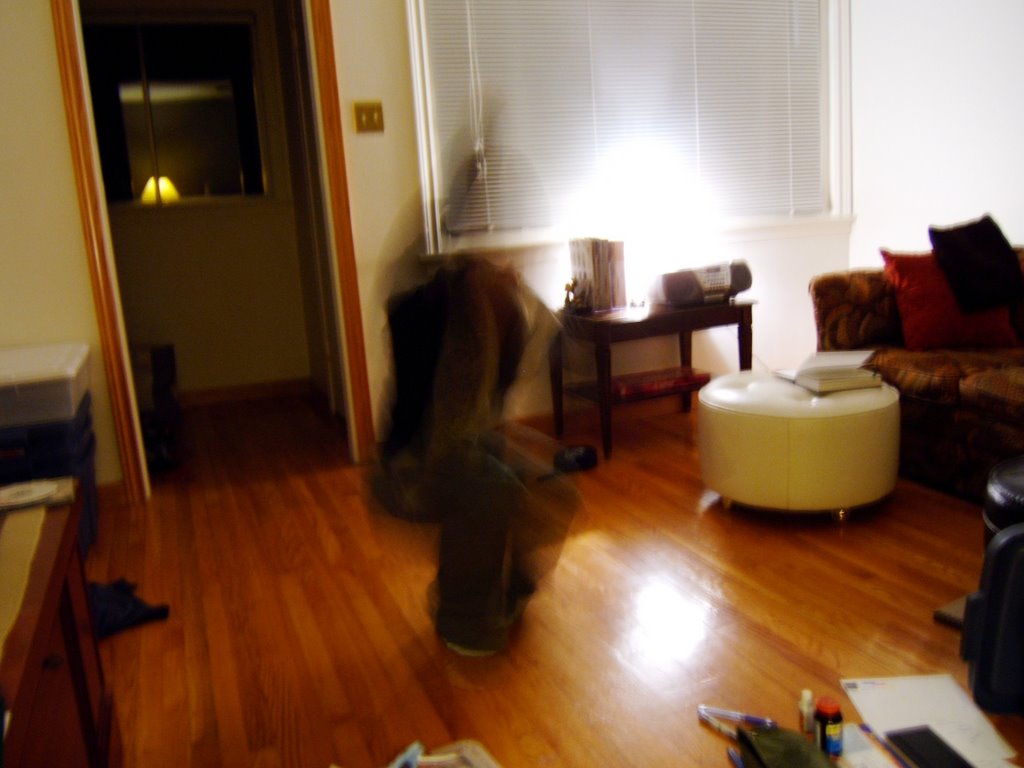
{a picture taken by bryna. i am performing a very special dance move in our living room}
I have now lived in my new abode for one month now, and despite the sinkpipe exploding & loosing its green algal contents all over everything, & the raucous magpie conferences at 5 a.m. outside my window, it has been a lovely month indeed. Here is a brief list of particular things I enjoy about my dwelling place:
-- the good, nourishing food that we cook in the kitchen, which is rather spacious & full of light & contains a rolling spice drawer & three shelves of tea.
-- the light shining on the hardwood floor in late afternoon; the ridiculous slipperyness & possibilities for dancing on that floor (see above photo)
-- the shadows: on the white walls, the 'waves' on the kitchen floor in the morning
-- the constant chirping & singing of birds (not so much the indignant magpies, though)
-- the lilac tree that was in full bloom when we moved in, the honeysuckle, the shade of the elms
-- the gravelly back alley, the green sweep of the old trees & the houses nestled between them, the kitchen view
-- tigerlilies, russian sage, peonies, irises, asters, delphinium...
-- hearing the united church choir across the street singing on sunday mornings, coming in my open window
-- riding my bicycle home on 115th avenue after the rain, the certain swoop of the slick road, the arches of trees above me
-- the night june air coming in my window, direct ambrosia to my nostrils, it pulls me, unravels, makes me want to go out walking forever.

Tuesday, June 20, 2006

pigeon poem.

{the remains of a pigeon i found on my way to work.}


today on the sidewalk
i found the splayed skeleton of a pigeon

wings barely attached to bones, but legs still pink,
with toes curling like a baby’s fingers
caught in the soft tight grip
of that sleep –

& it caught in my body, the sadness:
empty cambium of the heart carved out,
aery avian wingbones to pestle down ache
& slowly digest –

for an empty nest will haunt us, frightens us,
the little lobes of the beak still intact, mouth
open half in song –

for when a bird falls suddenly out of the sky
death comes to the breathing
to hollow us out,
remind us that

death is felt only by those still living,
a strange reflecting of sun on wings
falling not on the dead
but those who are left clinging, clinging

as beloved things leave us
& we try to hold, to hold
with soft pink pigeon-toes
to the birds of their souls –

Wednesday, June 14, 2006

run on (for a long time)

{weeping birch shadow out the kitchen window}
{mottled sky}
I can't believe how often I seem to forget how good it is to run, how truly good running is for me. How it's such a good alternative to being trapped in my head, where I spend far too much time -- especially with my job, which accentuates my tendency to overthink, overanalyse, overintellectualize absolutely everything. Sometimes I wonder about all the things I should let myself do, but don't because I'm too busy theorizing about implications & complications & such. It can get completely ridiculous.
So sometimes it's just so good to go running simply because I can. It's good to just breathe & be (with unshaven legs & little blue running shorts) & not theorize or scrutinize. It's good to do something like run, that is purposeful yet natural, freeing & yet so corporeal -- so good to remember what the body is for, to remember that I am inhabiting a body, that my mind lives somewhere. It brings me to far more awareness, it is far more meditative that any other activity I could think of.
& I love where I live now, very very much -- the air is so thick in the river valley, thick & pendulous in the aspens, thick as the cottony veils. Air like curtains of pollen, air & light. Gravelly footsteps, dust & salt on damp skin gather like silt in the slow green of the river, only the sound of breath & pulse, everything very very close, nested in the calm lungs of trees; trees are lungs transpiring, surrounding you with breath held waiting for rain & night & sleep.

Tuesday, June 06, 2006

burya buryakiv (a storm of beets)

{i like shadows & poppy teacups}

Yesterday Bryna & I made borshch for her friend Dawn, who had been estranged from beets for quite some time. But now, thanks to this recipe, I am happy to report that Dawn & beets are friends again. My baba would be proud of that, & also of the purple-brown rings of juice still staining my fingertips.

Borshch of the most traditional sort

- 1 large onion, chopped
- a couple cloves of crushed, minced garlic
- ½-1 cup of fresh mushrooms
- some vegetable oil, or butter
- 2-3 cups of beets, diced (if you want to be really fancy, you can grate them, but I like to make very chunky, hearty borshch)
-1 cup of diced carrots
-1 diced potato (or more, if you like it chunky)
-2-3 cups shredded cabbage
-lots of freshly ground black pepper
-some (hungarian-style) paprika
-salt if you like
-8-9 cups of water (can used half vegetable broth too, it really brings out the flavours & you won’t need to add salt)
-lots and lots and lots of fresh chopped dill!

First, sauté your onions and garlic in vegetable oil or butter until the onions are translucent. Add the mushrooms and cook until just tender.

Next, cover the beets with just enough water and cook until barely tender, with the lid on. I like to call this ‘sweating’ the beets! Then add the potatoes and carrots & cook until tender as well & all is full of buttery sweet root-vegetable perfection...

Add a little paprika to taste, along with freshly ground pepper, and salt (if not using broth) and then the cabbage. Add the rest of the water (to your desired consistency) Cook until cabbage is barely tender.

Squeeze in a little bit of lemon juice (not too much, just a little for a bit of tartness) and add all of the chopped dill. Bring to a boil and then simmer until all vegetables are as tender as you wish.

Serve with sour cream (or thick plain yogurt) on top! Add extra dill to taste.


July Borshch

essentially the same ingredients as the above version, but use:

- ½-1 cup long green beans,
- 1 diced sweet apple, and
- ½-1 cup of fresh garden peas (unless this repels you too greatly... apparently it does for some)

and leave out the cabbage and mushrooms.

Add these ingredients when you’d normally add the cabbage, and cook until beans are tender. Use a little less paprika and pepper.

Sunday, June 04, 2006

ears & hearts

{shadow on the garage door.}

lilacs, remixed.

first night in the new house;
midnight is rainy grasses & the sounds
of weeping birch-braids tangled,

& the bursting lilac tree –

today my mother & uncle
admired these blossoms, called
them lai-luks, just like those under

mama’s window
; and the sound

blooms at the root of their tongues;
those two syllables: lai – luk
& i hear my baba’s left an inheritance

because i can hear her voice again

like a persistent pulsar, i can hear her
voice in the air through
that long ai: lai-luk – lai-la-lai-luk

shaping the earth through sound;

a memory like a seed pod
bursting forth, her voice shapes
the earth, the garden of poppies roses cucumbers

in the loam of my cochlea,

& that sweet cool wrinkled skin of summer,
voice like water ripples in the tin washtub
my cousin & i are shelling peas

plink plink plink

& she says, come take some lai-luks, girls
we watch her strong legs under the flowery gusts
of her skirt, veins of periwinkle blue

warm skin flowing so soft under earth

caked to her hands, hands overflowing
with lilacs in little twig bundles, wrapped
in a washcloth given to me as her voice

waves goodbye & i still smell the lilacs,
still hear the lilacs in her voice sounding
into the years of mud & loam &

the dusty brown ghosts of lilacs resonate

& regenerate in the voice of my uncle, my mother
myself we are flowers, we are the roots
that dig down, absorb the sound &

grow from that earth, she is

the earth now, her hands are full of lilacs,
her hands moved her heart, pushed her voice
sounding like the soft remnant of a star

in the middle of thousand purple ears of lilacs

her voice whispers through the earth
now a live little pulse moving through
everything & the seeds of sound scattered

in my voice & i hear i say lai-luks in my hands
my voice my (h)ear(t) --

Thursday, June 01, 2006

how to pronounce 'lilac'


{our lilac tree}

I have been thinking of my grandma especially much lately, living in this new house of lilacs & rhubarb & sparrows everywhere. The following is a poem-embryo thing that is not finished at all -- rather, this is the way it emerged out of my head & into my writing book, & hasn't been shaped or smoothed.

When we were moving in, everyone commented on our lilac tree in the backyard, as it was in its prime that weekend... It was lovely at night to press your nose up to the windowscreen & inhale until inebriated by the scent. Everyone would comment on it & I began to notice they all pronounced 'lilac' slightly differently. There was a whole spectrum of vowels; 'lai-leks' & 'lai-laks' & 'lai-liks' (In the song 'Lilac Wine', Nina Simone says 'lai-loks'!) but I noticed that my mother & my uncle pronounced it 'lai-luks' & everytime they said it I could hear my baba's voice, so clearly, echoing & echoing with such presence. & so I had a messy sort of memory come to me like this:

* * *

living in the house now that i am sure
she helped me find
night air of rainy grasses & honeysuckle
& bursting lilac tree
how she used to say ‘lilac’ as lai-luk
& how her son, he daughter still say it like that
beautiful aural inheritance at the root
of their tongues & how i can hear her voice still
her voice like a persistent pulsar
how the sounds shape the night air
that long ai lai-luk
how the sound shapes the earth
like her hands working loam in the garden
the poppies roses & cucumbers of summer
their sweet cool wrinkled skin like my cousin
& i sitting in the tin washtub, pea-pods plinking
against metal in cool water
remembers watching her strong legs moving under
the gusts of her skirt
the periwinkle veins blue & lacy intricacies
under her warm skin flowing so strong she moves
the earth with her hands caked on her golden ring
how she goes still shaping with her voice,
lilacs in bundles twigs wrapped in a washcloth given to me
in the front seat of the car her voice waving goodbye
sounding into the echoes of mud and loam the flowers
violet the roots absorbing the sound & growing from it
that earth she is in that earth now her hands moved
in her heart through the earth now, live little echo moving
through everything she makes growth
& i carry the seeds of sound in my voice & in my hands &
i say lai-luks as the sound shapes my hands my voice my heart