Saturday, April 29, 2006

stupid earl. (some anthropological observations)

{i am at the bus stop}
Whenever I find myself in places that make me feel terribly uncomfortable and accentuate my awkwardness, I’ve found I can survive many less than savory situations by being an anthropologist. Once that’s established, I can then proceed to distance myself from any unwanted stimuli by analysing and intellectualizing anything and everything, especially things that are disturbing and/or overwhelming. My last few visits to particular eating establishments inspired me to write down a number of observations that have been accumulating over a long while.

After I get used to the dim light & extraordinarily loud, obnoxious music (& finish searching the menu for something meatless yet still containing some amount of protein) I am continually confronted by the fact that most popular chain restaurants are replicating & perpetuating binary gender roles overtly & unapologetically. This is not necessarily a trait of all restaurants in this culture. I can name many, many restaurants that do not create this type of space; however, on multiple visits I’ve noticed that Earls is a perfect example of a rigidly gendered environment. Not only is the space gendered, it also replicates the conventionalized gender roles of a capitalist patriarchy.

I suppose it’s no worse than any bar, but I never go to bars or nightclubs so I don’t have as much experience with analysing those spaces. It’s horrible to be in there because it seems every time I’m there I have to bite my tongue and never reveal my observations. I’m always there with very conventional people who just don’t understand & anything I say is lost on them, or I’m there with my dad, who finally has regenerated his taste buds after chemo obliterated them, & wants to enjoy his favourite caesar salad in silence. But I am digressing. I will now describe this little microcosm of patriarchal hegemony.

The first thing I always notice is that the interior decorating generally has a theme that we might categorise as being ‘masculine’ (in this culture) – dark mahogany wood, rough-hewn stone fireplaces, everything big & angular. With enormous squishy dark brocade chairs pulled up to the tables, it makes me think of a Victorian patriarch’s library. (belonging to Earl, yes?) There is usually a large bar area in most Earls restaurants, complete with large screens endlessly showing sports games with only males playing, of course – because, you know, serious sports fan don’t watch women play, even if they’re really ‘hot’ tennis players or wearing beach-volleyball bikinis! Men are behind the bar, concocting alcoholic potions, and in the kitchen, preparing all the food. They do this all fully clothed, whilst the far-less-clothed women are flocking together by the door, waiting.

Women are the waiters here. According to my informal counts at 3 different Earls restaurants, women outnumber male waiters 5 to 1, and any males in that position tend to be responsible for cleaning off the tables, instead of bringing out the food & drink. Regardless of exact numbers, I have noticed a pervasive phenomenon. Our ‘Earl’ plays the Pygmalion-patriarch in ensuring these women are dressed identically, in little black skirts and high heels – terribly impractical for being on one’s feet all day, but essential, of course, for accentuating the curves of the buttocks and the breasts, which are barely encased in tight lululemon pseudo-‘yoga’ shirts that tend to have necklines plunging to just above the solar plexus. Thoroughly hairless skin, tanned & layered with make-up, hair on the head artificially coloured to either unrealistic blonde or improbable black. Individual identity becomes negligible. They are sculpted into the ideal ‘attractive’ female in the culture; there is no variation, nor is there anything androgynous, or, rather, sexually-neutral about their look.

In this way, I see them as being essentially made into another product at Earls, commercialized into a sexualized serving object – these ‘Earls-girls’ have had their individualities blurred in this adherence to a hyperfeminine stereotype. They may cater food to all members of the public, but they cater aesthetically to the ‘male gaze, here where (to paraphrase John Berger) men look and act, and women appear (and serve). Women are evaluated and valued on the basis of what Laura Mulvey calls, ‘to-be-looked-at-ed-ness’.

Some people get quite indignant when I bring this up, telling me I’m prudish, or try to tell me that it’s the women’s choice to look this way, and perhaps they like it. Firstly, it’s not a question of prudishness – breasts are not offensive to me at all. After all, I do possess them myself (though quite subtly). And secondly, I don’t doubt that some women don’t mind the extra money they supposedly get for being the ‘pretty piece of flesh’ serving up, well, pieces of flesh. I don’t doubt that some need no coercion to dress this way, and they have no qualms about being hired based on their appearance (and, it seems, bra-cup size). But even if they feel they are being empowered, does it really changed the fact that people are still exploiting them, that their sexuality and appearance is being exploited? I’m not sure it does.

I guess it’s like in pornography. I really don’t accept the whole argument of the potential for it being a source of empowerment for women. (or anyone, really.) You can create something with the best, most empowering intentions, but what happens to it when it’s devoured and re-interpreted, mis-interpreted by the masses – is it still truly empowering? Can something empower someone truly even as it continues to contribute to their exploitation? The post-modern thing to say might be that if one believes they are empowered, that’s all that matters. But I don’t know. I think that’s just more than a little sketchy & naïve to see that as empowerment. Even if they are willing to be subjected to the ‘male gaze’ (among other things), I really do believe that they are simply conforming to the hegemonic norms of ‘beauty’ and ‘femininity’ in this culture that are constructed and enforced for male benefits, which highlights male power. So neither pornography based on women’s desires nor women dressing up to serve the male gaze is going to overthrow any patriarchy, or convince anyone otherwise about their beliefs about women’s rights and status, which, contrary to the beliefs of many, are still an issue! As Audre Lorde would say, these sorts of tools will never dismantle the master’s house.

The Earl’s-girls are so ingrained into the Earls restaurant environment that it seems quite difficult to dismantle Earl’s cushy little house, & they don’t seem to mind. What irks me most of as is the lack of people questioning this – do they really care that many of these girls aren’t even terribly good at their job, because their ‘hotness’ makes up for it? Is it that even if the men in the kitchen aren’t having a good day, and the meal is less than stellar, they can say, ‘well, at least the waitresses are hot!’ Do they even recognize that they’re drinking their man-beer (never a fluorescent green martini – those are ‘girly drinks’!) in the ‘Red Lite Lounge’? (How much more obvious can you be in evoking a brothel?) What is really so different in theory between Earl’s-girls and Playboy-bunnies?

I’m really not so sure there is a difference. Playboy*, of course, is clearly about overt sexuality, phallocentric male sexuality in particular, via the ‘consumption’ of images of ‘attractive’ women. But how different are food and sex, when compared for the possibilities for pleasure? At Earls, as in many restaurants here, it’s very easy to see how women are clearly transformed into products for consumption via the male gaze, along with the food they serve. Women may eat food at the restaurant alongside the men, but it is clear that Earl sees them little more as either further decoration (or detraction) from his uniform little harem of servers, there for the male’s viewing, and serving, pleasure.

Give me Cafe Mosaics with their subdued service! The skinny boys & tattooed girls wearing whatever they like! Serving food, & showing local art on the walls!
Or the King & I. Pleasant, fully clothed boys and a few girls in bow ties. That’s much better. Or Roots, where they all wear chef-outfits with personal embellishments, and you serve yourself, mostly. Gender-neutral and focused on nourishing food, 'tis what a restaurant should be.


*I don’t even want to start talking about Playboy here. I recommend Ariel Levy’s book "Female Chauvinist Pigs" as an thorough, well-written, & unapologetic look into that scene, as well as the miasma of bars/nightclubs/‘reality’ tv, etc, etc. It really highlights the pervasive extent of ‘Playboy’ culture and the continued exploitation of female sexuality, which is not only restricted to men – the reinforcement comes from females themselves, females of all sexual orientations.

because...

{bryna, standing in the field}
...it's like standing... on your head!

what beauty this is

{riverlot field}

driving home i see those flooded fields... how can people not know what beauty this is?

-- neko case, ‘fox confessor brings the flood’


There are some things I would like to tell the counter-protesters in Caledonia, Ontario who have issues with the peaceful protest by some people from the Six Nations.

Yes, it’s certainly inconvenient to have a road blocked for a month, isn’t it?

However, wouldn’t you agree that it’s also rather inconvenient to have the land you know taken from you and exploited for centuries, rather problematic to have your ancestors’ graves overturned and shoved beneath excessive unnecessary suburban development? Yes?

I just cannot understand how so many people feel no connection to the landscape. Or, if they can appreciate the beauty of it, it’s only in a very superficial way, like it’s picture painted especially for them, instead of something far more vast & powerful, & something they are part of. In the industrialized world, cities are not connected to the land, even though their sewers and cables and basements form a twisting labyrinth beneath the surface – cities float above the earth on a crust of pavement, and the boundaries between cities and the ‘wilderness’ is definitive. There is a binary, the ‘civilized’ and the non. This does not exist everywhere.

In Anna Maria Kerttula’s book 'Antler on the Sea', about Yup’ik, Chukchi and Russian relations in the village of Sireniki, she relates a conversation between a Yup’ik woman and a Russian visitor. The Russian is poking fun at the woman, because she is walking around outside in slippers. He says, ‘What are you doing, wearing those out on the tundra, you’re supposed to wear those inside the house, they’re for the home.’ She replies indignantly, ‘Isn’t the tundra my home?’

I think of my own forest that I know and love so much. I think of how comforting it is for me, how much more sane & like a real person I feel when I am there. How I know the certain trees by their bright splashes of lichen, trees with bark nibbled by the porcupine, the birch cradling the lost antler of a deer. The pussywillow tree, the fuzzy hanging candles of aspen blossoms, the woodpeckers in the rustling poplar. & the saskatoon bushes, the kalyna-berries, the waxwings calling. The curve of the hill at the edge of the earth, the eight deer wandering in the long grasses, white flashes, the soft silence when through the branches one will look you right in the eye. The sunlight coming through blackened branches, warm furnace of the woods. I lie in the field there & feel the earth under my back & my bones are filled with good. It fills me, the land fills me.

I think of my dad and I once, we were hiking up a ridge & looking over the Kananaskis Lakes to Elk Pass, & my dad said, “I look out over this land, and I just wish I were big enough to wrap my arms around it all, and just hug it.”

This land hasn’t been in my family for millenia. My ancestors never knew it. But it’s a part of my self, it’s woven into my memories. So much has happened there to me. Skiing, running, wandering there & speaking to people I remember the sound of my breath echoing in cold ear-caverns, the calls of waxwings, the way the light looked when something was said to me that if I stand there long enough I hear it all come back. If I can feel so strongly to this forest – what would it be to have the stories of my people’s cosmogenesis, creation, history, and collected memories for thousands of years all cached in the same land? If humans had been created, right there, under the manitoba maple? If those small ridges in the hill are the ribcages of my ancestors?

When the stand of aspens I could once see from my window was suddenly cut down, I was devastated. The empty line of the sky made me nauseous for days. I felt severed. When I think of this, I realize I understand a very small bit of what it might be line to be forcefully evacuated from a homeland of ancestors, of your lineage’s history. How can people not see how psychologically damaging it is to relocate people, to take their land from them? This is unfortunately a major part of Canadian history, this process of forced disconnection.

If my forest was destroyed by people bent on building & buying, I honestly don’t know what I’d do. I cannot comprehend losing it. It makes me ache for anyone – & there are hundreds upon hundreds of cases here – who has had their land taken from them.

I recently wrote a paper on the linguistic links to place and landscape among the Inuit, and the ‘oral maps’ created that not only help in navigation, but in creating a sense of belonging, as when Mark Nuttall and Béatrice Collignon speak of the ‘memoryscape’. This is a powerful way of understanding place and its connection to people – people who do not live on the land, but live with the land, because they were created as it was created. & they know that there is so much knowledge stored in the landscape. Knowledge, memory, and the land becomes a living mnemonic; as you experience it, you remember, and it changes each time you visit, yet remains the same presence, the same force, the same place.

I am so grateful to my parents for raising me in a way that taught me to feel a connection to the land, despite dwelling in an pavement-covered environment. Teaching me respect for it and the value of connecting with the earth. Taking me to Kananaskis when I was less than a year old, my mother carrying me on her back up the mountain, around Marl Lake. My dad taking me to the creeks and lakes of the Windfall boreal forest, going mapless & learning to follow water and changes in vegetation to wind your way around, showing me places he loves and feels spiritual about. My grandma, always with earth caked under her nails, always in the garden with her raspberries and root vegetables, praising growth. It helps me to understand better and truly appreciate the different ways the land can be understood.

I just strongly believe in recognizing multiple epistemologies, respecting different understandings and ways of knowing. Maybe if the people in Caledonia actually thought about what it represents, what it means to live in “Canada, your home on Native land”, there might be a little bit of enlightenment. If they would think beyond the narrowminded, ethnocentric roadblocks in their own minds, their dominant truth that oppresses multiple others, perhaps the barricades could start to come down. If they cannot face this, that block will remain.


Friday, April 14, 2006

this poem isn't quite done

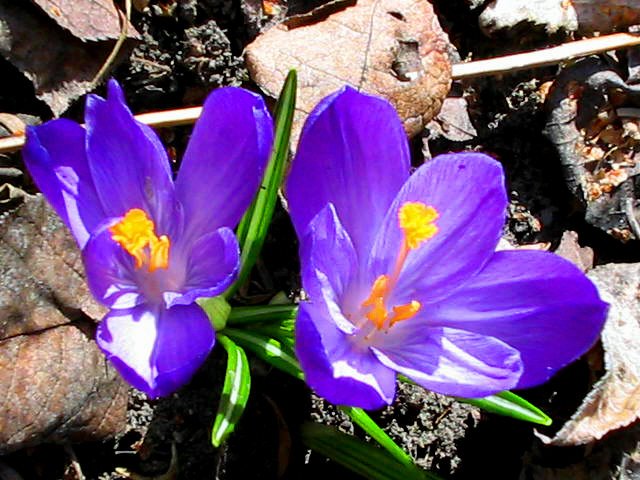
[crocuses in the garden]
(but the crocuses are opening already)
* * *
there is
no separation
in the worlds between us –

they lay like lichens bright on
the rocks clinging, a necessary
symbiosis, the strata giving life

to bright mosses, death revealing
layers of emulsion as the picture
becomes clear –

death is not a foreign language.
& there is no need for translation

there is no separation
just a transliteration, same
speech transcribed in another
alphabet;

or the transfiguration of
sound – death is just a different accent
from the same country, upon the same
words shifting through time
& place

but i need no passport to visit you
all i need to do
is speak to you
in any language

in a heartbeat
like waxwing wingbeats pressing
up to the trees

& you answer me
with a tongue like petals of crocus
pushing violet up
from your whole throat
now the earth

Sunday, April 09, 2006

earth day footprint

[walking over the edge of the earth]

If you go here: http://myfootprint.org/

you can have your ecological footprint calculated. This is mine:

CATEGORY
GLOBAL HECTARES
FOOD
0.5
MOBILITY
0.7
SHELTER
1.3
GOODS/SERVICES
1.5
TOTAL FOOTPRINT
4
IN COMPARISON, THE AVERAGE ECOLOGICAL FOOTPRINT IN YOUR COUNTRY IS 8.8 GLOBAL HECTARES PER PERSON. WORLDWIDE, THERE EXIST 1.8 BIOLOGICALLY PRODUCTIVE GLOBAL HECTARES PER PERSON.
IF EVERYONE LIVED LIKE YOU, WE WOULD NEED 2.2 PLANETS.

I am hoping that when I move into the city and my commute involves much less of the bus, I can reduce closer down to one planet and my 1.8 hectare. It's terrifying to know that the American average is 24 acres. I don't know how many hectares that is, but seems like it's a lot.

Sunday, April 02, 2006

flocks.


{waxwings in a tree, at riverlot.}

i am making another little chapbook of poe-hems, accompanied by photographs & collage-bits. it is called 'waxwing cloud' & should be finished by the end of this month... one reason why i haven't been putting things here is because i am saving them for the book. they shall be introduced in a tangible paper-form instead. (in the meantime, i will try to put up pictures & essay-like fragments... i have just been lacking in time & desire to spend more hours on the computer...)

now, i am not sure how many of these wee books shall come into being. if you are reading this & would like one, let me know if you want one or two or six. for then i shall be able to make just as many as i need to & none will end up sad & superfluous.

so. i will update more on this as it materializes...

take care. happy spring! vesna pryjshla!

Wednesday, March 15, 2006

waxing poetic about skiing. (oh. that's a bad pun.)


lately upon waking up in the morning, all i want to do is go skiing; honestly, the eventuality of going skiing at some point in the day is all that can lure me out of my bed. today i knew i didn't have to work in the evening so i found myself counting the hours between going to school & working there & then going home so i could retrieve my skis & then go around & around for an hour before coming home to do more work. my sanity has been preserved by the snow. (which is starting to melt at an alarmingly swift rate....)

when i ski i think a lot about things i bury in the various layers of sedimentary strata in my brain. these are things that would upset me any other time, but somehow they seem less disturbing. they still ache, but they ache in a way that seems natural, like the burning pain between your shoulder blades (where your wings would grow if you had them) when you fishbone up the hills. that sort of pain is accepted, & can be understood.

everything feels heavy lately. bone marrow turned into amber, heavy heavy light. i think sometimes about how i feel like i've suddenly grown up over the last few months. it's strange. i've always felt numerically ageless & insouciant in so many ways. but now, i feel that i have suddenly realized not my chronological age, but my actual emotional age.

when i found out dad was sick i was having a lot of issues with my anxious, paranoid brain. it sort of shocks me how quickly i was able to force that to subside, to gather up all the strands of my loose mind to prepare myself to help him. i still can't believe how i managed to get through some of this. how i can quell the horrible internal discord that i feel in order to take care of him, take care of my mother. & she too has needed that so much since her mother passed away.

sometimes i think, too, that it is my grandmother's strength that allows me to function right now. i like to think it's been transferred, inherited, somehow. my mother gave me a cheque the other day for a large sum of money. she told me it was my inheritance from my baba. it struck me as so strange. incongruous, even -- because when she said it i thought about the old ukrainian word babizna "an inheritance from one's grandmother" & how it seems to consist of the words baba + zna, & how zna maybe comes from znaty, to know, znannia, knowledge. i don't know the official etymology, but i know that for me, my grandmother's wealth will never be associated with money, but wholly with knowledge.

sometimes lately when i start to feel crumbly, i think that what i need is someone to come & take care of me. but if i go out on my own, i go skiing, i realize that maybe i can take care of myself. & just bothering to actually do something for myself is what i actually need.

however, the snow is melting now, & while spring is all fine & good, running until my joints complain does not compare with the lovely low-impact glide of skiing. i think the season's over... & so i lament.

Monday, March 13, 2006

"momentum...for the sake of momentum..."


I wonder if anyone would notice or care if I skipped my job(s) and class & just skied around & around & around the woods all day? Every morning lately I wake up feeling like I haven't slept, my heart beats too fast & my groggy brain keeps repeating Run away! Run away! I know that I'm far too busy right now, that I have taken on too much, and I should not complain about it because it's my own fault. I had hoped that it would distract me & keep me from thinking about things I don't want to think of, but now it's just starting to become very stressful. My body is rebelling & leaving me with sick stomachs & tension headaches and face-aches, because I told it to shut up, we can't stop yet. There's nothing I can really let slip right now.

But I skied for over an hour today, just before sunset. I came upon a I felt so clearheaded, with a good, new healthy ache in my shoulders. I feel so much more like a balanced human once I've been moving around in my forest, much less like the maladjusted extra-terrestrial I usually am. (or at least I am a better adjusted alien, there...) & I love this snow, the cold weight is satisfying, the fluffy amalgamations of flakes comforting. This winter has been strange and tiring enough, I would have been even more confused if it had been snow-less. It's reassuring.

The trees were so lucid this afternoon, & on the back stretch near the edge of the earth, a cloud of waxwings passed over me, all fluttery and srrrreeeeeeing. They settled in a tree & I stopped in the middle of the long hill to listen to them, watch them fluff their feathers up & perch on the tops of the aspens. It was so lulling, little waves of birds waxy in the sunlight moving between the tree-tops. I felt very lucky. The forest is a potent cure & I am grateful.

* * *

This week I have also been listening to the Neko Case CD continuously. One of my other most lovely moments in a while involved her in my headphones singing 'Lion's Jaws' & me dancing around in a deserted parking lot making waltz-steps in the untouched snow. (I should listen to Audrey, & dance more...)

I wish I had Neko's ringing voice. I sing 'Star Witness' in the shower & wish everyone sang more often, more spontaneously. I know my baba did, all the time, but she comes from a countrywhere their latest revolutionary actions mostly involved folk music and rebellious rock songs.* My mother used to sing more too... but my sister always got embarrassed or something when she sang & yelled at her, so she stopped.

Most nights, when I wait for the bus at the Westmount transit station, a man in a mustard-yellow puffy coat comes in. He looks permanently distracted, & carries a plastic bag from Grand and Toy. Sometimes he eats a bag of dill pickle chips, & paces back & forth until the Kingsway bus arrives. But the most striking thing about him is how he'll abruptly burst into song -- not just any song, but something in French, almost operatic. Ah, je veux arriver...! He's done it twice now; once he sang to the window, the other time to the vending machine. It was highly amusing. People look at him like he's absolutely crazy, & maybe he is, but I don't think that is indicated by his singing. Bus stations, with their concrete & plexiglass have quite good acoustics.

I keep wanting to sing my grandmother's songs but they tend to make me choke a little, still.

* Dr. Bohdan Klid at the Canadian Institute of Ukrainian Studies did a presentation recently on "Rock, Pop and Politics in the 2004 Ukrainian Presidential Elections and the Orange Revolution."

* * *

... and the melon sky
& my snowy eyes
see a different night...
the night i fade into the lion's jaws
of my regrets, & young love...
those teeth themselves could not divine,
their pressure estimate,
the haze i wish to never break
& never contemplate
momentum
for the sake
of momentum...

[neko case, 'lion's jaws]

Saturday, March 04, 2006

myeloma


marrow

1)

every bone in the house
is creaking now

like shaky stair-boards when
they protest as your sleepy
footsteps crack
their backs --

you can touch the echoes
as they slides down the slippery
wooden vertebrae

through our bodies
through the walls
with their pink insulation
frayed like your fading marrow

& they go tunneling
through your heart –

2)

for you know full well
my sister only says
she loves you
as a selfish reflex
of a guilty conscience;

so if you die she can absolve
herself immediately, pure
sweet & martyred, poor
fatherless child!

so she can still come home late,
with nicotine tooth-stubs shed
on the doorstep,
a poisonous but sparkling
heart, wailing & stumbling up those
tired railings
drunk

& maybe she’ll visit him
sometime, but she’s got
no structural integrity:

she’ll go
if it fits in her schedule
between sleeping with
strange boyfriends
& those hungover sleeping-ins.

3)

she’s never home,
of course, but
it’s really you
the dog is keeping vigil for –

shuddering quietly at the
door, waiting;

outside the yellow-white
weeping birch bone trees
whipped in the winter wind.

the chill of a nosebleed,
a cell-creek the only water
in the february drought –

& mama, i held her hand
last night, soft stomach
of worry turning itself
inside out –

for your frame is fragile as
a dry fish skeleton separating,
turning slowly
to salt –

what is left of you, what
is left of us to hold
you through?

(i am my mother’s daughter
but my father’s son
too)


what is there but blood
& spiral sequences,
a strange glue –

i’ll be the paste between
the tendons,
i’ll be our new connective
tissue,

you grew me from your cells once.
& now you say
i’m grown up,

(i could be your parent too)


4)

today you stood up
for the first time,
your new shrunken bones
shaky.

aged a decade in
mint green pyjamas, white
salt-lines on your lips,
the scruffy white beard
of seventeen days without
the strength for shaving.

you are the old man
& the sea, adrift on your
hospital bed --

your body betrayed you,
left you trying
to vanquish the marlin

swimming through your feverish
doldrums, the monster
in the sea of morphine –

sharks have sucked your
marrow dry, this disease
has no cure but i know
that you are
tougher than hemingway

& i know that right now
you will survive,
even if you must return
to the sea someday

because i like...

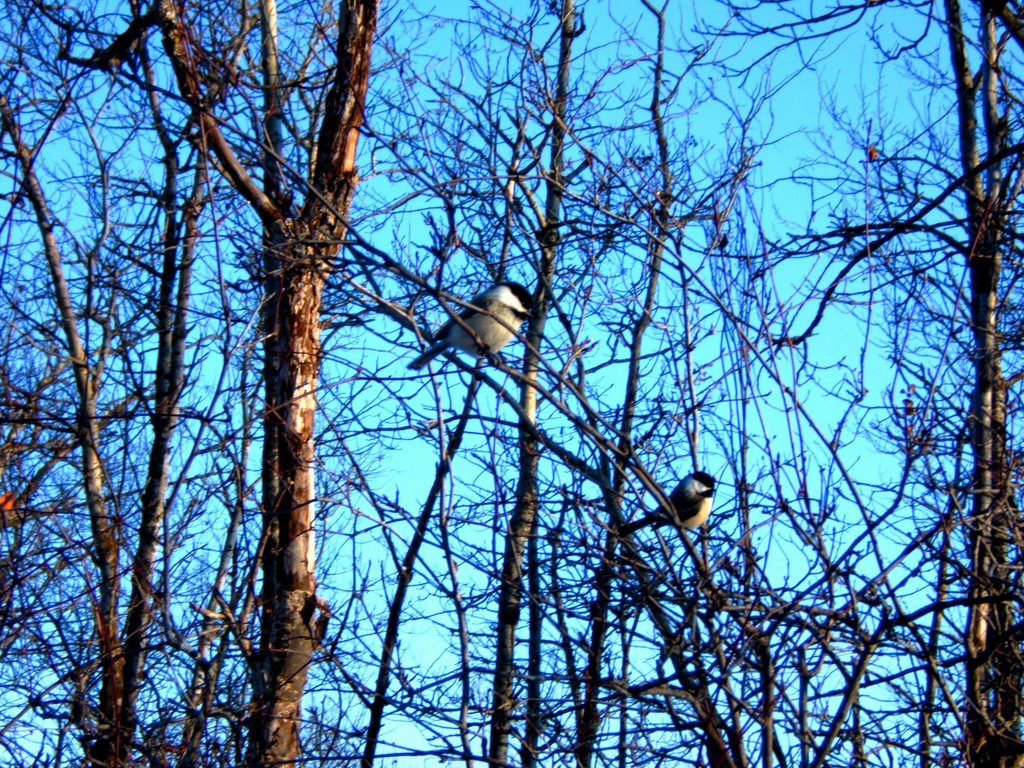
[chickadees at riverlot]
...birds.

Wednesday, February 22, 2006

more semi-baked poems.

i)

waves of waxwings
wind & disperse
across treetops,
the beating of their wings
like windblown snow;

embroidering the city sky
with a swooping language,
fluid black flecks, woven

& moving over a
page of whiteness,

confusing me as to
the syntax
of the deceased.

your baba was, they say, she
was a good cook, good mother
good dancer she was so good
but
i can’t say it like that,
this was,
this were,
when she still
is;

realis, irrealis.
dead is not alive,
but that doesn’t negate the
fact you existed. it
proves it.

so death is not was;
death is just forgetfulness.

like the waxwings migrate, repeat
their soft sreeeeing call
over and over --
they’ve flown
for as long as they can remember,
they will fly as long as those wings
breed memory.

i cannot use the past
perfective for someone
who is still living for me,
for dying did not render you
not my grandmother.

ii)

& i want to believe in the semantics
of small miracles,
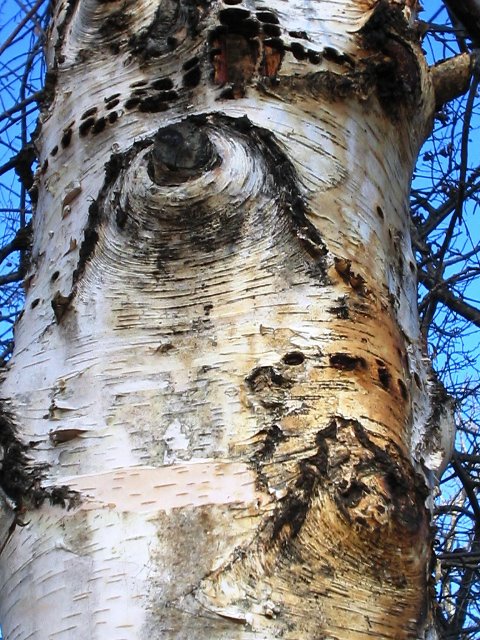
like faces in birchbark,
a voice heard in my sleep.

like the lone bird
who came to us, came to me
in a dream sealed by the
tail of the bird in flight, gold wax
dripping into my eyes,

the light in her face, her soft hands
when she said,
ty duzhe dobre, oh, you are doing so good!

there is no was. she is ever
my grandmother, not irrealis.

but real & migrating
like small birds
that come in a waxwing cloud,
alight suddenly, embroider

themselves dark into the pale
sky of the heart, then
move on.

"Ich bin meine eigene Frau..."

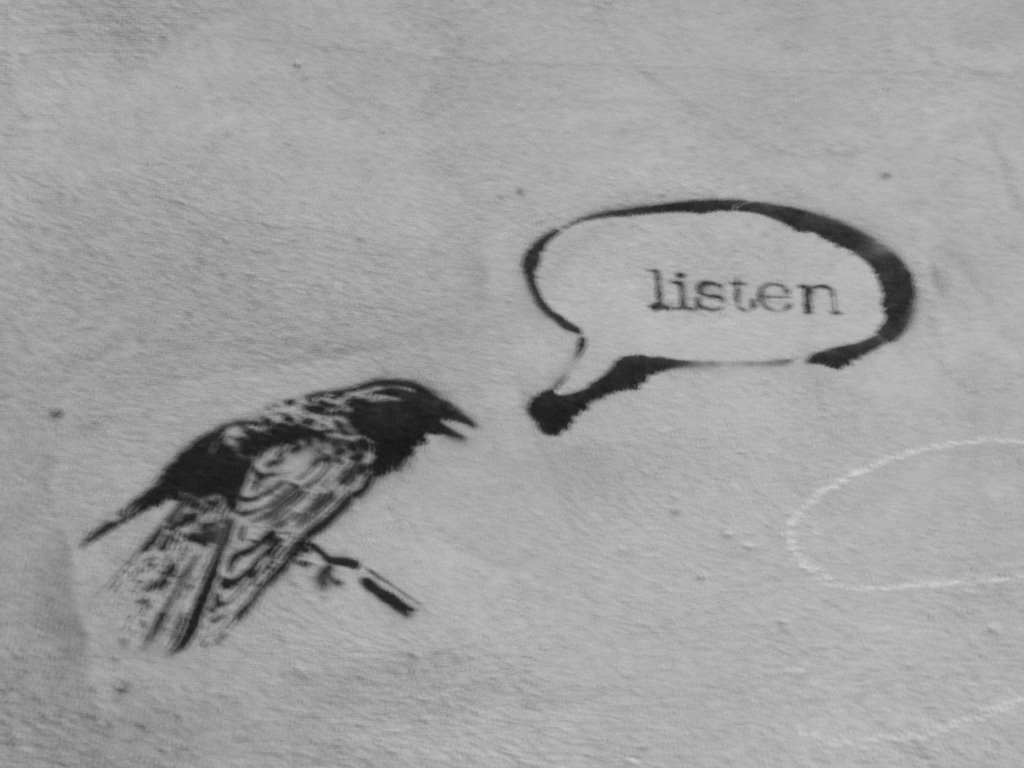
the infamous listen bird. (which is not actually advertising for Listen Records.)

Last weekend I had the good fortune of seeing a beautiful play at the Citadel – ‘I Am My Own Wife’ by Doug Wright, performed by John Ulyatt. It was one of those one-person-playing-multiple-character-shows that I find so engaging & truly amazing. To watch someone change characters by the subtlest, yet most crucial gesture, – the tilt of the head, the heaviness of a footfall, all before speaking. It was brilliant, as was the set design, with all the vintage furniture suspended from the ceiling in the dark recesses of the stage, at times softly illuminated...

The story was very compelling as well – it was based on Doug Wright’s own interviews with Charlotte von Mahlsdorf, directly inspired by her taped oral histories that he researched in the early 1990s. In short, Charlotte was an East German transvestite who led a tumultous and colourful life as a furniture collector and antique museum curator, surviving an abusive father, as well as both WW2 and the Cold War... I do not want to give too much away here – her story should really be seen, experienced if possible (the play is over now, but the script is published and quite easy to find at a University library, I’m sure) so I should just say that her life story is definitely compelling and unbelievable.

One of the recurrent issues in the play is the ‘truth’ of Charlotte’s stories; the narrator (Doug himself) and other characters continually return to this problem, distressed because they cannot match her memories with the documented facts. The play deals beautifully with this issue, I think, and through Charlotte he reveals something very crucial about the practice of collecting oral histories, and the intrinsic truth present in any individual’s recollections of her life.

I will paraphrase Charlotte herself in saying that we must accept her stories and she herself accepted each piece of furniture that she found -- unperfected, unadorned, untainted by polish or authoritative voice, simply as is. Her stories are truths in that they are her ‘telling of herself’, her own perception and mediation of the story of her life, and they are thus full of truth, in all their complexity and contradiction. She preserved her stories, collected them like her furniture, memories illuminated in ornate clusters, suspended, arranged, sometimes tangled, but all there, all part of her life. She presented her stories just as she pulled old antiques out of a box, randomly, out of linear order. Is a shiny repainted cabinet a more truthful cabinet than one covered in scratched and fading stains? I would think it is almost less so, because then we are not seeing any record of its experience, that is being hidden from us for the sake of appearances.

If we want to actually understand Charlotte’s life, it is better to go to her memories and personal experiences, rather than Stasi files or German talk show hosts. Bryna and I discussed this in depth after the play, and we both see this play as being supportive the value of plural histories, and oral history as an important research method. Whether or not one even believes in a definitive, objective truth, this play eloquently shows us that finding one grand ‘truth’ matters little in coming to deeply understand one person’s life experiences and motivations. ‘I Am My Own Wife’ is Charlotte’s truth, and also Doug’s truth as the mediator between her words and the audience. His writing is reflexive, but never overpowering, and he conveys their relationship simply and eloquently.

One of my favourite bits:

[Charlotte]: …This table, he is over one hundred years old. If I could, I would take an old gramophone needle and run it along the surface of the wood. To hear the music of the voices. All that was said…

I am so glad I got to see it. I remember Audrey telling me about it after she saw it first in New York City two years ago, how amazing it was. Mostly I recalled her mention of the ‘lion picture’ but I shall not reveal that secret now.

***

Last Wednesday I also got to hear Wade Davis speak – (or, rather, orate documentary-style!) He seems to be traipsing across the country with some lovely photography in tow, and I very much enjoyed what he had to say. (I also covet his National Geographic explorer-in-residence position. I would like to take over when he retires....) He mostly touched on subjects he has covered in his newest book, ‘Light at the Edge of the World’ and an upcoming documentary, and while I wished in many cases he could go into depth about what he was mentioning, I was just glad to hear these subjects discussed.

He talked mostly on the incredible importance of biodiversity / cultural diversity and the (hopeful!) persistence and adaptability of culture. I was especially happy that he mentioned language endangerment and the connection of language to cognitive system. He spoke so passionately about the respect needed for multiple systems of knowledge, for indigenous worldviews to be valued on the same level as industrial/Western scientific knowledge, that I wanted to run up and give him a hug.

His discussion of sacred geography and examples of Quechua communities in Peru also interested me – I was not so aware of the exact symbolism of the layout of Macchu Picchu. I am so enthralled with the image of the Urubamba river (below the city) being the earthly parallel of the Milky Way, the glacier of the sky. It makes perfect sense now, really... His descriptions of the village pilgrimages, especially the one where the whole community runs up and down the sacred peaks surrounding the village in a ritual, mappable pattern to rebalance the feminine energy of the earth goddess Pachamama was so beautiful, and especially provocative considering my obsession with landscape and toponymy right now. I am hoping to write a paper soon for my northern language issues class that somehow deals with landscape and its place in unifying community and asserting group and individual identities (through language).

Davis's book Light at the Edge of the World (which contains many of the same photos!) is waiting for me at the library and I am excited. I am taking full advantage of my not-sleeping to read & read & read...

den' narodzhennia.


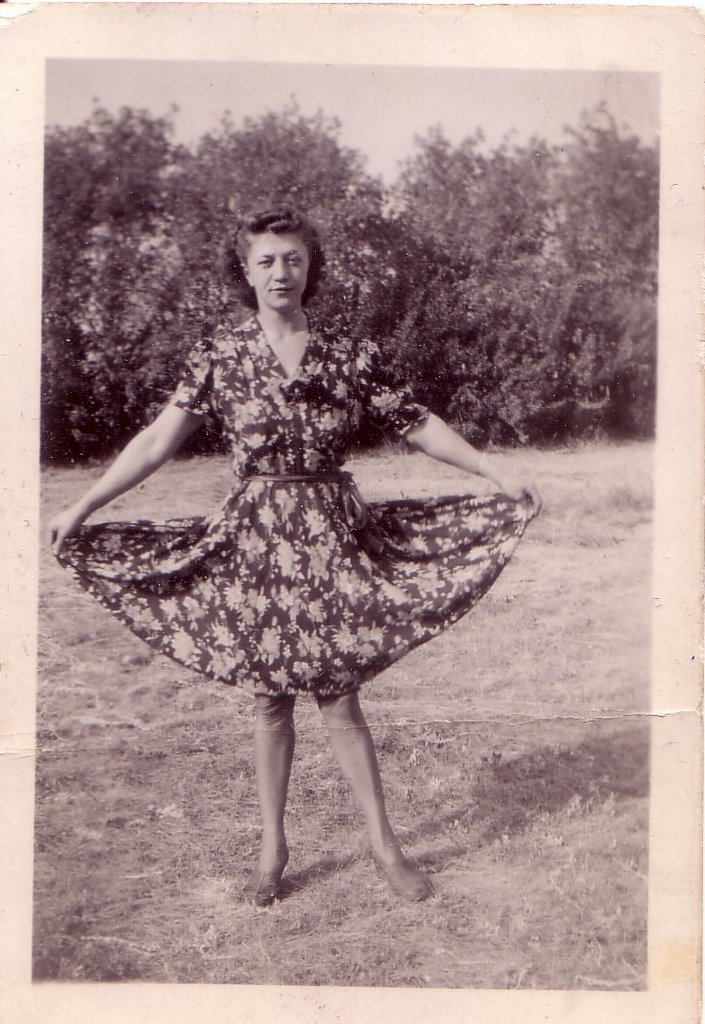
This is my grandmother. She would be 91 today. I think she's in her mid-twenties in this picture... already a long way from the cowshed down by the river.

She loved to dance. She taught me to waltz on the yellow linoleum kitchen floor at her house, she told me of hiking through winter fields in the darkness just to get to the dances, the vechirnytsy, in her youth.

I never knew her when she was this age, of course, but this is how I like to think of her now: free to dance all the time now, waltzing & curtsying so whimsically & elegantly in the perpetual-summer grasses somewhere not far away...

"Mother, may I go out dancing? Yes, my darling daughter... "

Wednesday, February 08, 2006

quelques mots...


I was recently thinking (due to discussion about oral history) about how life has no linear plot.

Of course, being in an industrialized society we have conceptualized time in a line, chopped it into quantities, conceptualized it in little manufactured calendar-boxes and threw out our cyclic sundials in order to keep track of stuff, keep track of our “progress” – thereby shaping our thoughts to make it seem as if it does have a set plot.

But really, even past-present-future are so hazy in actuality; things happen from all directions, the past floats up, or we do go ‘back in time’ & get mired in the past just as we also sometimes get ahead of ourselves & fall into the future. Thoughts and memories and emotions of the distant past and distant future influence us at all times, at random, things happening in tangents, never going only forward. It’s not always just the direct moments of cause-&-effect, one at a time, plotted out on a little triangular diagram from grade seven language arts...

& our lives are never organized thematically. Sometimes everything does happen at once & every action becomes tangled in multiple plot-strands, each string informing every other string of action in the knot. It’s impossible.

This is also why I like to write poems. (& really have insurmountable trouble making stories...)

For poems also have no linear time, no insistent plot.

I like being able to deal with one moment, or a series of moments all entangled but in any particular order. I like to deal with the emotion & the memory. I don’t necessarily like to concoct what will happen next.

& I’ve been reading much Nicole Brossard lately. She is a fantastically amazingly delicious Quebecois author who is sadly overlooked, I think, in favour of Anglo authors such as Margaret Atwood, Brossard eclipses her in all manner of everything, especially in the sheer beauty of each line. I have never been terribly shaken by an Atwood sentence, I’ve never really wanted to quote her. Her phrases are very edgy & functional & powerful, yes, but nowhere near as purely poetic as a Brossard clause. When I read Atwood, I can see she is psychologically interested in stories, but I wonder how much she loves language. Brossard, however – even her language is filled with details about the delicacy of pronouns, the heady rush of verbs. “Certain words ignite me.” I am currently reading Hier, or en anglais, "Yesterday at the Hotel Clarendon" which is so intricate & gorgeous & lush. Four character-strands told in interwoven musings, swift short chapters. So wrenchingly good. It made me miss my bus stop...

I also finished her short book Elle serait la première phrase de mon prochaine roman, ("She would be the first sentence of my next novel"). It’s a lecture she gave on writing, & she says something I really like:

«La vie n’est pas un histoire, elle est un émotion qui donne lieu à une aventure dans la langue.»
"Life is not a story, it is an emotion that gives rise to an adventure in language.''

I think that very much summarizes poetry for me, & even as much as the reason why I am ultimately writing. I truly do not see my life as a narrative, although certainly I am aware of a great many patterns and recurrences and the overarching laws of causes and effects – despite all this, I feel like I live through a mass of collected experiences and feelings that come from all directions, all origins in the past/present/future, and it is this wholism I want to convey in my poems.

As Brossard also writes in Elle serait...

« Je suis un femme du present... J’aime sentir que le monde peut converger, se défuire et se reconstituer en moi dans le temps court du poéme... » "I am a woman of the present. I like to feel that the world can converge, deconstruct and then reconstitute itself within me in the short time of a poem. "

This makes me happy, because her words encourage me on my writing, and the possibilities of a particular project of mine... I don’t have to have conventional dialogue! Or chapters! Or linear plot! & what I write might still even make sense to people other than myself... Her words inspire me to experiment with forms.... I’d been working on a short ‘novella’ since August, which is not really a novel at all, & is not really prose either... it’s a poem with chapters, I’d say... & it got very frustrating & fragmentary so I left it alone for a few months... because I couldn’t make things happen in it. & I thought things were supposed to happen. But Brossard’s ideas make much sense to me & have provoked me to continue it... because maybe I can make something readable & meaningful out of little themes & images in this little haphazard web... a collage with threads of characters... I too don’t want to be caught in the ‘subject-verb-object’ schema Brossard speaks of. I like using second-person narration, & switching point of view often, to focus on different significant details like changing camera lenses.

I like tangents. That is the moral of the story.

So go read Nicole Brossard. She is easy to find en francais (mais oui) et en anglais, et aussi en les deux a la meme temps!

Tuesday, January 31, 2006

a brief survey of remarkably nutritious weeds.


Weeds I Often Find Growing Right Where the Houses are Taking Over.

(English – Cree – Latin)

Dandelions – Osawa-pukwanes – Taraxacum officinales

Roots were gathered and dried in the autumn, and fresh boiled leaves were used to purify the blood and lower blood sugar. The liquid was also used to treat anaemia, jaundice, anxiety & eczema. All parts are edible and rich in Vitamins A,C,E, B-complex, iron, calcium and potassium. It’s useful in treating liver, digestive and urinary ailments, stimulating the immune system, aiding in weight loss and generally being used in salads, soups, breads, and cold drinks. I have been told my maternal grandfather made excellent dandelion wine.

Nettles – Masanak – Urtica gracilis

The young plants were added to soups or eaten like spinach, and the leaves were used to treat kidney stones, diarrhea, irregular menstruation and intestinal parasites.
Coagulants present in infusions may have helped treat internal hemorrhages and nosebleeds.
New research is showing that nettles are useful in treating prostrate cancer, hepatitis, and gall-bladder ailments; they can improve short-term memory in people with Alzheimers as well as fight gingivitis. Actually stinging the skin with the prickles, thereby using it as a counter-irritant to stimulate the body to produce more anti-inflammatory agents, has been useful in helping people with multiple sclerosis, rheumatism, localized paralysis and arthritis.

Yarrow – Wapanew-uskwa – Archille millefolium

Salves were made with powdered yarrow and fat to put on wounds, as yarrow contains coagulants and has anti-bacterial properties. It was also used to make a sort of hair rinse. It has also been used as a sedative, anaesthetic, anti-spasmodic and anti-inflammatory drug, and may be useful in treating diabetes-related conditions. It should never be used in high doses. Many of my nosebleeds as a child were treating by my father shoving some of this up my nose.

Pennycress – [can’t find Cree name!] introduced from Europe – Thlaspi arvense

This plant is high in Vitamin C and sulphur, and has a strong, mustardy taste, and can be slightly irritating even used sparingly. (Can poison in high concentrations) Historically, it was used in the Mithridate antidote to poison, and employed throughout Eurasia to treat rheumatism, lumbago, and eye inflammation.

Shepherd’s purse – [can’t find Cree name!] introduced from Europe – Capsella bursa-pastoris

All parts of the plant are edible (pods, seeds, sprouts, and taste like a combination of turnip and cabbage. My dad says they’re spinach-y... It has been used by many North American peoples as a seasoning in soups and stews, as well as ground into flour for bread and porridge. It is rich in Vitamin C and has been used as a remedy for speeding healing, stopping internal bleeding, easing earaches and stomach cramps. It was used in childbirth to cause uterine contractions (it contains a chemical similar to oxytocin. New research shows that the plants may help prevent cancer.

* All information from Dr. Anne Anderson’s interviews with Cree elder Luke Chalifoux, other random bits from my dad, and Edible and Medicinal Plants of the Rockies by Linda Kershaw (Lone Pine Press, 2000)

nettles & pennycress


weeds


beside the shiny white fence
the tough fleshy roots
of nettles & pennycress
grow & grow

fed by the carcasses of
trees their grip is
insistent as a foetus
clinging to her mother

beneath the silver
willow tatters, red crab-apples,
disembodied wreckage of a wing –

for the mansions have come!
monstrous garages gouge
at the earth perforating a womb
as people pave gardens

but yet & yet the wild yarrows
still reincarnate, heart-shaped
shepherd’s purses are flapping in the wind –

amongst these hardened yards i know
my baba will float around, coaxing;
watering with a tin can, pressing at the soil
with her earthy fingernails

(she taught us to plant things,
her hands were always so
covered in loam & love)

& i know she’ll pity
those rich mansion-people
& their big houses full of cars
& impoverished little children
who live in the disconnected basement
stunted by ceilings & video games

because she knows
that weeds will soon
start pushing up through
that faulty foundation

weeds
will always survive
like houses don’t –

Monday, January 23, 2006

"proverbs! they are like the drugs to me!"


Rummaging around in my computer-files I unearthed a number of things I wrote in the summer-time, when I was in Calgary. I had very very little time to write anything while I was there but somehow assorted fragments of poems did find their way into my notebook & then I must have typed them when I arrived home in August (though I don't remember doing this!)

Most of my journal-writing while I was there was anthropological observations on international children & their behavior (& adventures with syntax!) & dwelling in the city of calgary. However, other little bits arose (because I really needed to get my mind off the other 16 hours of the day!) & I present them here. They are quite disconnected. Little bones in a pile. I don't think much can be constructed of them. But they make for some interesting archaeology.

* * *

this morning is
wrestling with sad eyes
& phone cards.
can’t get through to azerbaijan

but that's okay, because
bahar & arzu tell me over & over again
in their sweetly hoarse semaphore

“baku – azerbaijan – caspian sea
– beautiful – atlantic ocean – we are in canada
– will you help us?
yes, yes"

we are drawing pictures
& maps
on the foggy rainstained bus window.
“green grass!”

her voice of jet lag,
soft green rain & sleepiness.
cacaphony of interlingual voices
falling into my head.

at lloyd’s rollerrink
we stumble around holding hands,
braving the 80’s time warp
"hey meeekey you're so fayna"

as tall ostrich-like men in sweats
from that bygone era skate circles around us.
bahar stares at them: "not like azerbaijan!"

"yes, yes!"

* * *

(this one is bilingual. i remember getting so tired of analysing & explaining English that it came out in ukrainian first. it's not very good & the translation is lacking. & i think in ukrainian i sound like björk does in english at her least inscrutable)

there lives within trees
the warming thought of fire,
embryos waiting to burst aflame

as leaves send early
the ghosts to incubate on branches,
words held up on an iridescent skeleton;

now come the waxy unfoldings in the rain,
with vowels spreading luminous & fiery,
offerings on paper tongues,

fragments floating to the sun –

вже живе в щирині дерева
тепла думка вогню,
зародок чекає запалитися

та й рано листи пошлюють дух
щоб висиджувати на галузах слив
яких ростуть на райдужних кістках

та й тепер у дощі прийде
розгортання воскове
та й голосні звуки
поширяють по’лумяно і світно
як на папірних язиках підношення,

як носяться уривки до сонця...

* * *

[hwy 2]

i am in the backseat
& restless as a

row of windbreak trees
arching their black spines,
rolling up against a swelling sky –

the river’s flooding her banks,
washing across a widening prairie night,
rain hiding the city lights
in the spiral arms of their systems,
galaxies reaching out to hold
trees & farmhouses

in long glowing tendrils,
aching anchor in the void.

* * *

[14th floor sunset, over nose hill]

moving over the landscape
we go as clouds
on the face of the sunset,

embossed & ever rolling
over the earth –

deep green grassy dream, soft sky
feathered down
like a drumming partridge wing –

waves explode, deadly violet
disappearing
into the warm annihilation of sleep

* * *

sunset sky like smashed nectarines
beer & the hum of the pop-a machine-a lulls me
i am a noun declining in my sleep

* * *

[walking home from kinko’s, 11:30 pm]

downtown moon reflects
silence like a watery lamp in the
dryness of the heart;

my tongue well-honed now
by the sediment’s swift flow
smooth grains slipping through

the throat’s reservoir
where i catch this sadness, cache
it in the full pool of my speech –

* * *
the only poem that is entire.

[horseshoe canyon]

wandering down into the
bright erosion of the earth’s skull
reveals the ochred slate of the heart --
cactus blooming gold & harsh
as sunlight,
spikes like lightning-struck rock --

& lichen grows in the folds
of a sandy cerebrum,
the thoughts of water
running through rocky synapses,
paths so pliant
& shaped by the wind,
the flight of
the slippery waxwing,
a swallowtail hawk

dives in the soft sage,
through sand moving slow
as time’s insistent hands,
through
epiphanies of wildflowers –

those red poppytongues
speaking nascent & blooming
with so much life,
for here is
the essence,
the origin, the barest dream of earth --

* * *

[kananaskis to jasper]

i didn’t think summer
would haunt me

but ashes
fly like reverse meteors,
into a sky dizzy with stars

& elk move as soft ghosts
around those mooncoloured bones
we disturbed

& i will remember
your voices

* * *

[athabasca glacier]

the ice carves soft pictographs
with its harsh smooth palms,
the language of rock
lapping with glacial tongues,
the endless watermarks
a notebook i wish i could
understand

* * *
(please forgive me, william carlos williams)

forgive me
for i have nearly been kissed
by that young spaniard

who calls me 'leeetle preeencess!'
& is waiting at the airport
for me to say goodbye

i didn't see it coming
for he spoke so innocently
with that lisping accent
so sweet & so cold

* * *

Tuesday, January 17, 2006

hammers & sickles.

[memorial to victims of the 1932-33 holodumor in ukraine, edmonton city hall]
This is a poem I wrote November 26th while at work. I'd stopped by City Hall at lunchtime for the memorial for victims of the Ukrainian Holodumor (lit. 'hunger-death'). But I forgot I'd even written it, even though I was very angry at the time... because this was also the day my baba died & I lost the papers somewhere in a folder. Yesterday I unearthed it & finished it.
* * *
hammers & sickles
downtown saturday
there was a memorial
for the holodumor –

i happened to see
you
watching us while waiting nearby
for a bus
you, everyone’s favourite socialist!

but as i sang shche ne vmerla ukraïna
i wanted to tell you
kick you,
shake you!
when i noticed the gleaming buttons
on your bag:

that soviet insignia shining yellow
as some badge of your leftist intentions
& i would like to believe
that you mean well,

but it shocks me
that you
so enlightened
are yet so ignorant of this symbol,

for the hammer & the sickle
were just as sharp-edged
as the nazi’s twisted swastika

because these were the tools
that stalin used
to pound people down,
beat out the gilt from siberian stars

these are the tools
that slipped the rope
around
the neck of a poet,
a priest,
a shaman, &

these are the tools
that scythed my family’s wheat!
used the very tools of their survival
to mercilessly made a breadbasket
into
a death-camp

turned them into bony ghosts
devouring their own, the living
& the dead
while sharp weapons guarded
overfilled silos
beside them –

& you think
you’re a revolutionary
of social rebellion!
or maybe you just think
you’re totally in fashion –

but i don’t believe in hipster irony

because there is no way
to make
hip satire of violent oppression
of these families, my ancestors’ deaths!

here we are still remembering
what the books gloss over –

& it is not yet time to reclaim those weapons!

& i just can’t believe that

someone

who would be the first to fight
against fascism & swastikas,

will still,
as a socialist
go around wearing this?
***
here:
& this next article upsets me -- why can't people realize they are of the same hurtful symbolism! maybe someday communists could reclaim them as the tools of workers. but right now, they are still stalin's. & millions of people can't ignore that the hammer and sickle do represent something that is just as dire and cruel as xenophobia and anti-Semitism.

indulging in delicious sounds.

[one of the murals on the exterior of the old youth drop-in centre on 101st/103rd(?)]
The other night Bryna asked me what my favourite music of this past calendar year has been, & I must have named at least five albums instantly. Later that night my sleeplessness coaxed me into making a list:

Takk – Sigur Ros
To be wrapped up in this collection of warm, moving layers, riding the bus with tea in one’s hands & Sigur Ros in one’s ears will alleviate sadness & most types of mental shakiness. Little illuminated clouds on September Sunday mornings, trees in amber swirling, raining down leaves to catch in tiny curb-whirlwinds is the cure for most bad things.

Fragmenti – Paris to Kyiv
Open spaces to fill, bells to hide things in. Here are echoes & textures & repetitions & variations, birds with familiar feathers & voices to remind one not to forget things. It feels very old & wise. Alexis Kochan has a very beautiful voice, a little higher than my mother’s, the way I expect my grandma must have sounded when she was younger & still had a full range. This also conjures a place, wide reverberating spaces that I want to make films of – films of wind, of grass growing, of clouds moving, birds in flocks scattering into the sunlight.

(Come on Feel the) Illinoise – Sufjan Stevens
Lovely & choral with banjos & oboes, & the sort of comforting, truthful voice I want whispering in my ear. Rather wrenching & grand songs about place & identity & personal-historical memory all mingled together. (Landscape + Identity = Love!) It made me think about the physical places that my writing is rooted in; I know much is attached to the Kananaskis area, but it made me realize just how much of my images come to me closer to home. From my forest, especially...

What else? Usually I do not like things that twang but Sarah Harmer (I’m a Mountain) can make slightly-twangy things lovely & joyful, things that I like to listen to over & over again. Chris & I (& Bailey the bunny) listened to this album at least six times in a row one day while we cooked...

Iron & Wine’s Woman King EP was a collection of folk-ish stories about various spiritual women that was poetic & provocative & also instrumentally delicious. Iron & Wine also made In the Reins with Calexico & this is also pleasant (& mariachi-fied!) Sam Beam’s lyrics fascinate me. They seem fragmentary at times, but the images & rhythms are so brilliant: “Black horse fly, lemonade / jar on the red ant hill / garden worm, cigarette / ash on the window sill”...

Ani Di Franco made Knuckle Down, which was also very good listening as usual; the song ‘Recoil’ is very much the second part of the song 'Welcome to:' & has brought me much comfort.

Beck’s Guero is good to listen to on the bus, & he has these lines that stand out in all the pleasant evocative nonsense, like ‘Hammer my bones on the anvil of daylight’. I like to listen to him on the autobus & it is good & distracting. Gogol Bordello made Gypsy Punks, and somehow they mixed Romany & Romanian & Yiddish & Russian & Carpatho-Ukrainian music with reggae-ish punk music & made something like good borshch that is political & charismatic & delightful & absurd. This summer M.I.A. (with Arular) gave me something to drown out the obnoxious pop music of my international pupils & I was grateful for that. It also helped me get up in the morning when I really didn’t want to.

There were also a lot of other musics I enjoyed this year, but they did not come out in 2005. I will have to make another list... Regina Spektor! Angelite
& Huun-Huur-Tu! Jorane’s live CD from a few years ago... Hmm. There were also a few CDs that appeared which sort of disappointed me... I was all excited for Four Tet (Everything Ecstatic) but I couldn’t really get into it. I don’t know -- it was interesting, much more complex, but it seemed to have lost a little bit of melody & warmth & replaced it with something that reminded me of... math... there was nothing there like ‘Everything is Alright’ or ‘Parks’. I think this is because of the loss of some of the organic instrumentation, or because the organic chunks were chopped up very finely & added to a repetitive stew... & while I admire the sound capabilities of computers, synthetic tones can often lack certain timbres, & I think it is the timbre we respond to most emotionally... The Decemberists’ Picaresque had a few songs I enjoyed quite much, like ‘16 Military Wives’ (which also has a delightful video!) but the whole CD lost its lustre a little too quickly. & Fiona Apple’s Extraordinary Machine was extraordinarily ordinary. Alas...

Currently I am eagerly awaiting the new Cat Power (The Greatest) on January 24th. I will run away from work on my break to go to Listen Records to fetch it! How delightful (& potentially detrimental to one’s paycheque) it is to be so close to so many music-shops...

ps: If anyone is reading this, I would like to hear your music-list for this past year...

Tuesday, January 10, 2006

a bohemian waxwing.


Look who visited me on Ukrainian Christmas morning! I didn't have any miraculous visitations from swallows home early from the south (as in the famous Shchedryk carol), but amidst the snowflakes & clouds of ash-berries a fluffy little waxwing came... He wandered about the grass at the front, as if he was looking for something, and then sat in the tree for awhile, eating berries (but luckily not the point of inebriation). He was rather mellow & let me get quite close to take photos. He then flew away to the next-door tree, making his little kee-kee! sounds.

Bohemian waxwings are one of my favourite sorts of birds, so I shall take this as a good omen.

I saw cedar waxwings in Drumheller this summer, swooping over that very green pond in front of the Tyrrell museum. They were dark and sleek, and their colours were so bright that it seemed as if they'd just had a fresh coat of paint.

I used to think that bohemian waxwings came from Bohemia, but no... I believe they were named by rather conservative bird-watchers who thought their bright splashes of colour looked rather 'bohemian' in a Prague-or-Paris art-cafe mustache-wearing absinthe-drinking outlandish-dressing late 19th-century hippie sort of way. Sillys.